

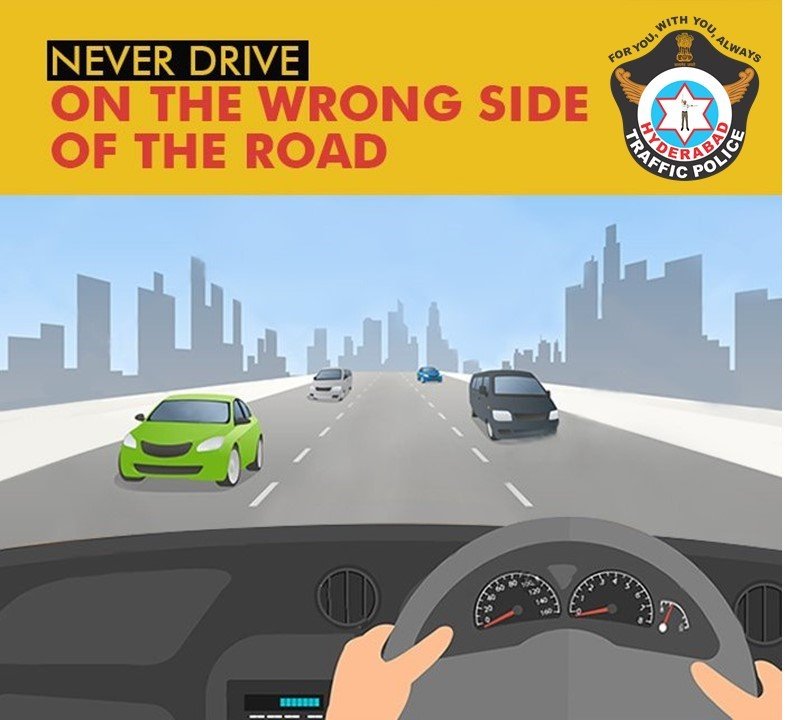
Wrong-side driving has morphed from a mere traffic violation into a deadly epidemic on Indian roads. This reckless act, where drivers deliberately cut into oncoming traffic to save a few minutes, is a primary contributor to road fatalities and a chronic headache for traffic management.
India, which tragically accounts for about 11% of all road fatalities worldwide, sees wrong-side driving consistently ranking as the second biggest cause of deaths on National Highways and a major factor in urban crashes. It is a profound crisis of indiscipline that demands immediate, multi-pronged action.
The Scale of the Menace
The statistics paint a grim picture of the road safety crisis fueled by wrong-side driving:
* A Leading Killer: Between 2017 and 2021, nearly 43,000 people were killed across India due to wrong-side driving.
* National Highway Fatalities: In 2019, wrong-side driving on National Highways alone claimed 2,726 lives, making it the second biggest reason for deaths on these high-speed roads.
* Rising Violations: In major cities like Delhi, violations are surging. Police prosecutions for wrong-side driving nearly doubled from about 95,800 cases in 2022 to 1.84 lakh in 2023, with the total number of challans and notices crossing 2.49 lakh in 2024. This increase is partly attributed to better camera-based detection, yet it highlights the sheer frequency of the offense.
Wrong-side driving is not a rare lapse; it’s a daily hazard born from a mix of poor infrastructure, weak enforcement, and a severe lack of civic responsibility.
Why Drivers Take the Fatal Shortcut
Understanding the causes is the first step toward finding a lasting solution:
* Saving Time and Effort (The “Chalta Hai” Attitude): The most common motivation is to avoid taking a lengthy U-turn or navigating a traffic jam, treating the wrong lane as a convenient shortcut. This reflects a deep-seated impatience and disregard for traffic laws (the “chalta hai” or “it’ll work out” mentality).
* Poor Road Design (Engineering Flaws): Unscientific or limited road infrastructure plays a major role. Lack of signage, confusing road markings, and badly placed or excessively distant U-turns incentivize drivers to break the rules.
* Weak Enforcement: While penalties exist, inconsistent on-ground enforcement or the possibility of avoiding consequences emboldens violators. Where enforcement is weak, wrong-side driving is treated as a routine act rather than a serious offense.
A Multi-Pronged Strategy for Solutions
Tackling this life-threatening habit requires a robust strategy encompassing Education, Enforcement, and Engineering (the 3Es).
1. Stricter Enforcement (E-Enforcement)
The law is clear, but its application must be stricter and more consistent:
* Harsh Penalties: Under Section 184 of the Motor Vehicles Act, dangerous driving, including wrong-side driving, can attract a ₹5,000 fine for the first offense and ₹10,000 for a repeat offense. Authorities must strictly enforce these penalties. For severe cases, the offense can be considered non-compoundable, meaning no excuses are accepted, and could lead to license suspension or imprisonment.
* Technology-Driven Surveillance: Deploying Automated Surveillance Systems, including high-resolution CCTV cameras and traffic monitoring sensors, is crucial. These systems can automatically detect and issue challans for wrong-side driving, eliminating human error and inconsistency.
* Visible Police Presence: Increasing the visible presence of traffic police at known hotspots and ensuring sustained special drives against the offense can act as an immediate deterrent.
2. Infrastructure Improvement (E-Engineering)
Road design must be re-engineered to make right-side driving the more convenient choice:
* Optimizing U-Turns: Re-evaluating road layouts to ensure U-turns are placed at reasonable distances and designed to accommodate traffic flow, reducing the temptation for shortcuts.
* Clearer Markings and Signage: Ensuring all roads have highly visible lane markings, clear median barriers, and unambiguous directional signage at all times, especially near junctions and exits.
* Physical Deterrents: Installing rumble strips, crash barriers, or physical dividers in areas notorious for wrong-side driving can physically prevent vehicles from crossing over.
3. Public Awareness and Education (E-Education) 🗣️
A cultural shift is necessary to instill a sense of road ownership and discipline:
* Defensive Driving: Promoting defensive driving as a core attitude—where every driver prioritizes safety over aggression and impatience—is vital.
* Targeted Campaigns: Launching sustained, high-impact public awareness campaigns that explicitly highlight the fatal consequences and severe penalties of wrong-side driving.
* Driver Training Reform: Integrating stringent modules on lane discipline, the gravity of wrong-side driving, and civic responsibility into all driving license and renewal programs.
The battle against wrong-side driving is a critical front in India’s broader war on road fatalities. By combining robust, technology-backed enforcement with smarter road design and a persistent focus on civic education, the nation can curb this reckless behavior, save thousands of lives, and make its roads safe for everyone.

