

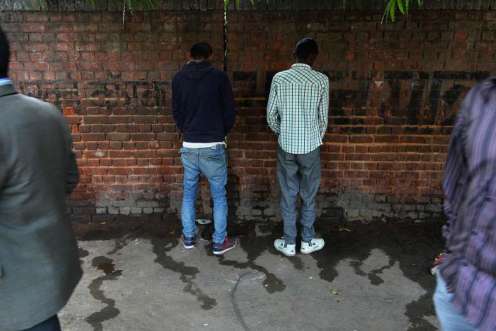
Roadside urination and open defecation remain persistent challenges in Hyderabad, even after the city achieved ODF++ (Open Defecation Free) status in 2019.
As of early 2026, the issue has resurfaced due to crumbling infrastructure and a high ratio of defunct public facilities.
Here is an overview of the current situation and the solutions being implemented to address this menace.
The Current Situation (2025–2026)
Despite having thousands of listed toilets, a significant portion of Hyderabad’s sanitation infrastructure is currently struggling:
* Infrastructure Gap: Out of approximately 2,200 public toilets, reports from mid-2025 and early 2026 indicate that nearly 60% are defunct or in poor condition.
* Maintenance Crisis: Many units suffer from broken doors, stolen plumbing fixtures, and a lack of water or drainage connections.
* Stench Zones: Areas near Metro stations (Ameerpet, Raidurgam), under-bridges (Secunderabad, Punjagutta), and public gardens (NTR Gardens) have been flagged by residents for persistent urine smells.
Key Solutions & Initiatives
1. The “LooCafe” & Innovative Infrastructure The Greater Hyderabad Municipal Corporation (GHMC) has partnered with private startups to introduce LooCafes—solar-powered shipping container toilets that include a small café and ATM.
* Why they work: They are self-sustaining, have “stink sensors,” and are monitored round-the-clock to prevent the vandalism that plagues standard public toilets.
2. Mass Refurbishment & BOT Model
To fix the high number of broken toilets, the GHMC recently launched a massive drive to:
* Refurbish 1,370 defunct toilets under the Build-Operate-Transfer (BOT) model.
* Outsource Maintenance: Private agencies are being given 10-year contracts to manage these facilities, with 25% of contracts reserved for Safai Karamcharis (sanitation workers) to ensure community involvement.
3. “Gandhigiri” and Social Shaming
When legal fines (ranging from ₹200 to ₹500) failed to deter offenders, the GHMC historically used creative social pressure:
* Seeti & Lathi: Sanitation workers were deployed with whistles and sticks to catch offenders in the act and point them toward the nearest functional toilet.
* Garlanding: In some “Gandhigiri” drives, officials garlanded men caught urinating in public and gave them lectures on civic duty to shame them into changing their habits.
4. The 2026 Special Sanitation Drive
Starting in late December 2025 and continuing through early 2026, the city launched a 300-ward sanitation drive. This includes:
* Converting GVPs: Transforming “Garbage Vulnerable Points” (places where people frequently urinate or dump trash) into “Selfie Points” with wall paintings, plantations, and rangolis.
* QR Code Feedback: Installing QR codes at all functional toilets so citizens can report poor maintenance directly to inspecting officers.
What Can Be Done to Improve Things?
To truly solve the menace, urban planners and residents suggest:
* Real-time Toilet Locators: Improving the “Toilet Locator” feature on the GHMC mobile app to ensure citizens can find the functional ones, not just the ones on the map.
* Aspirational Toilets: Building more “high-end” public toilets (like the ones currently being tendered in 2026) that are clean enough for women and children to use, which naturally reduces the “stigma” of public facilities.
* Uniform Pay-and-Use: Standardizing the small fee (₹2–₹5) to ensure workers have an incentive to keep the facility clean while remaining affordable.

