

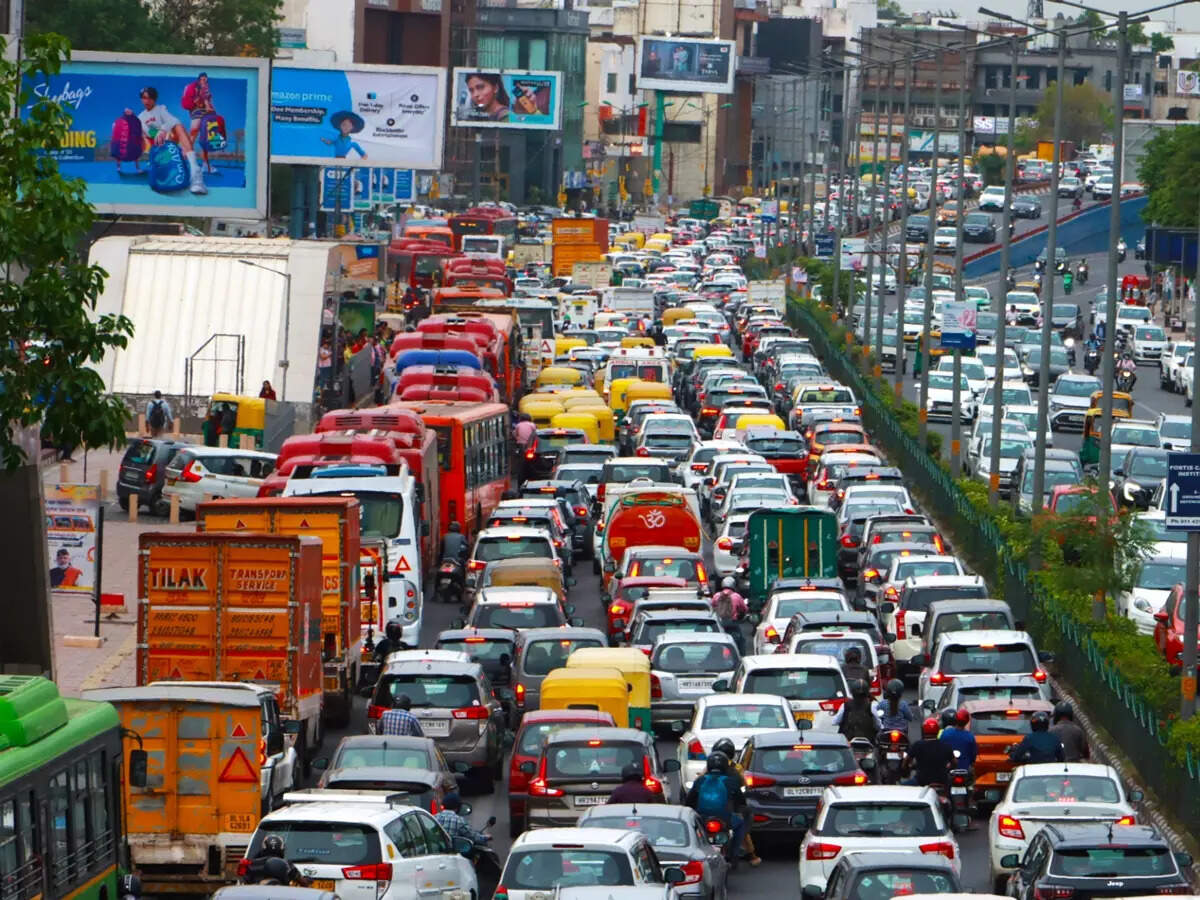
In 2026, India stands as the world’s third-largest automotive market, a testament to its rising middle class and economic vigor. However, this success has a visible, frustrating byproduct: the “Gridlock Dilemma.”
Nowhere is this more apparent than in Hyderabad, a city that has transformed from a quiet historic town into a sprawling tech metropolis.
The core of the problem lies in a fundamental mismatch: the rate of private vehicle acquisition is moving at an exponential pace, while supporting infrastructure—roads, public transit, and smart management—is struggling to keep up.
The Current State: A City at a Standstill
In Hyderabad, the average commute time for a mere 10 km journey is projected to reach nearly 37 minutes by the next decade if current trends persist. While the city boasts the impressive 160 km Outer Ring Road (ORR) and a growing Metro network, the “last-mile” and “inner-city” realities are starkly different.
- Vehicle Explosion: Between 2011 and 2024, the percentage of Indian urban households owning a motor vehicle jumped from 40.1% to over 68%.
- Space Constraint: While roads are being widened, the physical footprint of cities like Hyderabad is finite. We are essentially trying to pour a gallon of water (vehicles) into a pint-sized glass (road capacity).
- The “Flyover Fallacy”: Traditional urban planning has focused on building flyovers and underpasses. While these offer temporary relief, they often just shift the bottleneck to the next junction—a phenomenon known as induced demand.
Why Infrastructure is Lagging
The gap isn’t just about a lack of cement and asphalt; it’s a systemic challenge involving: - Fragmented Planning: In many Indian cities, multiple agencies (Municipal Corporations, Metro Rail, Water Boards) often work in silos, leading to roads being dug up shortly after being paved.
- Financial Constraints: Massive projects like the Regional Ring Road (RRR) or Metro Phase II require astronomical capital. Even with a ₹3.09 lakh crore national allocation for highways in 2026, urban inner-city funding remains stretched.
- The Priority Shift: Historically, infrastructure was built for cars. However, the modern need is to move people, not vehicles. Currently, public transport carries only about 25% of commuters in Indian cities, far below the national target of 45%.
The Blueprint for a Solution: Moving Beyond Asphalt
To solve the crisis, Hyderabad and India must pivot from “building more roads” to “managing mobility.”
- Integrated Multi-Modal Transit
The goal should be a “seamless” journey. A commuter should be able to take an electric feeder bus from their home to a Metro station, and then a shared e-bike to their office—all using a single digital ticket.
- Priority: Strengthening the Unified Metropolitan Transport Authority (UMTA) to ensure all modes of transport talk to each other.
- Data-Driven “Smart” Traffic Management
Instead of static timers, cities need Adaptive Traffic Control Systems (ATCS). These use AI and IoT sensors to adjust signal timings in real-time based on actual traffic density. - Transit-Oriented Development (TOD)
Hyderabad’s “Telangana Rising 2047” vision document highlights this: building high-density residential and commercial hubs around transit corridors. If you live, work, and shop within 500 meters of a Metro station, the need for a private car evaporates. - Reclaiming the Streets for People
Infrastructure must include:
- Dedicated Bus Lanes: Giving buses priority over private cars.
- Non-Motorized Transport (NMT): Building continuous, shaded cycle tracks and wide, walkable footpaths.
- Demand Management
Governments may eventually need to look at Congestion Pricing—charging a fee to enter high-traffic zones during peak hours—to discourage unnecessary private vehicle trips and fund public transit.
Conclusion: The Path Forward
The solution to India’s traffic woes isn’t just more bitumen; it’s more intelligence. By shifting the focus from “moving cars” to “moving people” and integrating technology into the very fabric of our streets, cities like Hyderabad can reclaim their mobility.

