

E20 Petrol Rolls Out Nationwide in India — What It Means for Drivers
India has officially made E20 petrol the standard fuel at all petrol pumps across the country from April 1, 2026. This marks a major shift in the nation’s energy and fuel policy.
What Is E20 Petrol?
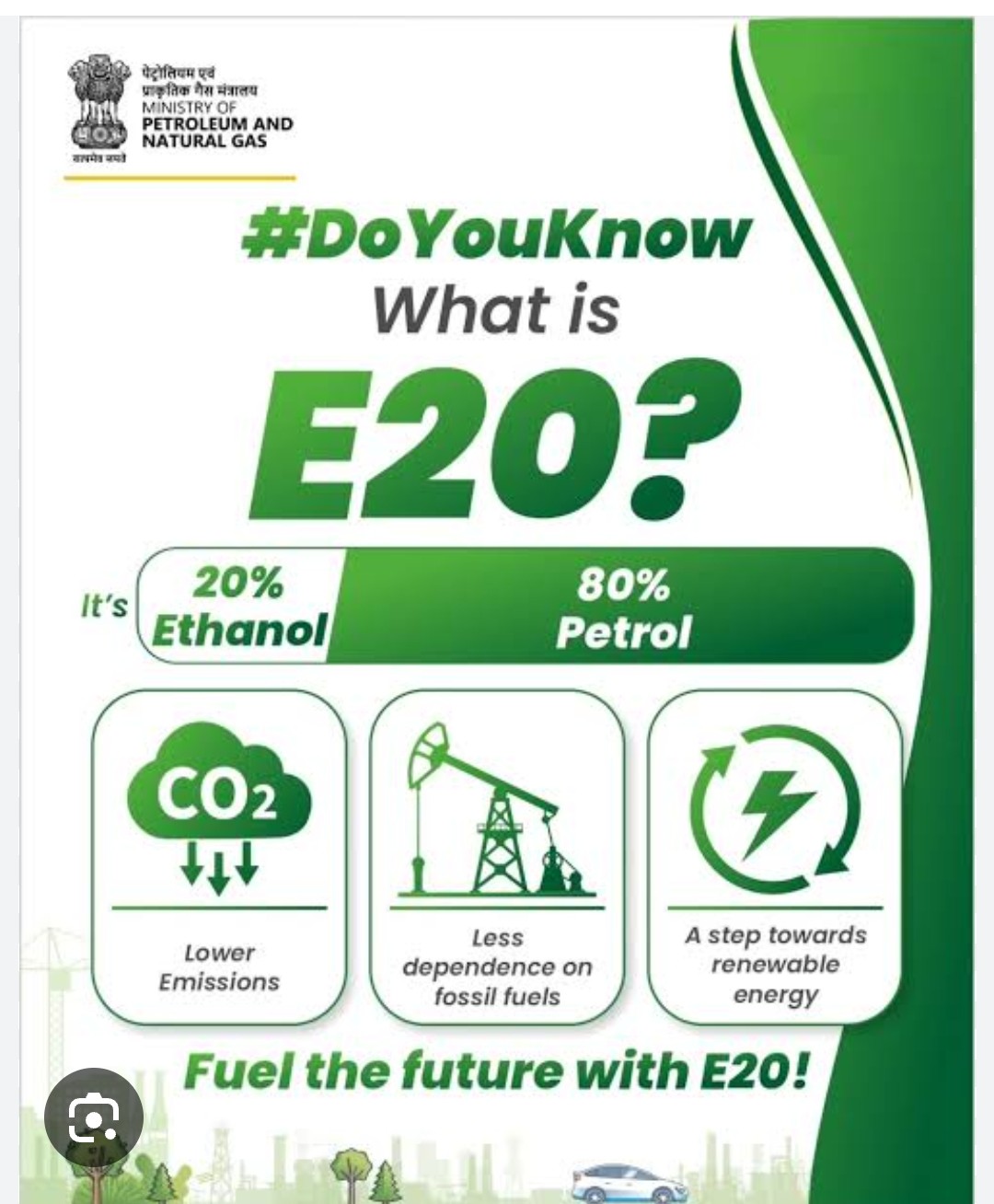
“E20” refers to petrol blended with up to 20 % ethanol and 80 % traditional petrol. Ethanol is an alcohol-based biofuel made primarily from crops like sugarcane, maize, and other agricultural produce.
Under the new mandate, all petrol sold in India must contain 20% ethanol and meet a minimum Research Octane Number (RON) of 95. This higher octane rating is meant to improve combustion quality and protect engines.
Why the Government Is Pushing E20
The central government’s move is tied to several long-term goals:
Reducing crude oil imports: By blending ethanol, India aims to lower its dependence on imported fossil fuels.
Supporting farmers: Increased ethanol demand helps sugarcane and maize growers by creating a steady market for their produce.
Lower emissions: Ethanol burns cleaner than pure petrol, which can help reduce greenhouse gas output from vehicles.
Officials hope these benefits will support energy security and environmental goals for the coming decade.
Concerns from Vehicle Owners and Industry
While the rollout is nationwide, many vehicles on Indian roads are not designed for E20 fuel. Reports suggest that only a small fraction of older cars and two-wheelers have engines fully compatible with a 20 % ethanol blend — raising worries among motorists.
Some owners are concerned about:
Fuel efficiency drops
Potential engine wear in older vehicles
Compatibility issues in cars designed for lower ethanol blends
These concerns echo surveys and industry conversations over the past year about real-world impacts on mileage and engine components.
What Drivers Should Do Now
Check vehicle compatibility: Owners of older cars and bikes should verify whether their engine is E20-ready.
Stay informed on fuel updates: Automotive manufacturers and the government may issue guidance on maintenance with ethanol blends.
Monitor performance: Any unusual drops in mileage or engine issues should be examined by qualified mechanics.
Looking Ahead
With the E20 policy now fully in place, discussions have already begun within the government and auto industry about future blends like E25 or higher ethanol mixes — though these are still in early stages of evaluation.
Summary:
India’s nationwide switch to E20 petrol from April 1, 2026, represents a significant step in its biofuel strategy, aiming to cut imports, reduce emissions, and benefit farmers. However, the transition brings questions about vehicle readiness and real-world impacts on older engines.

