



Addressing the Challenges of Minimal Nighttime Police Patrolling
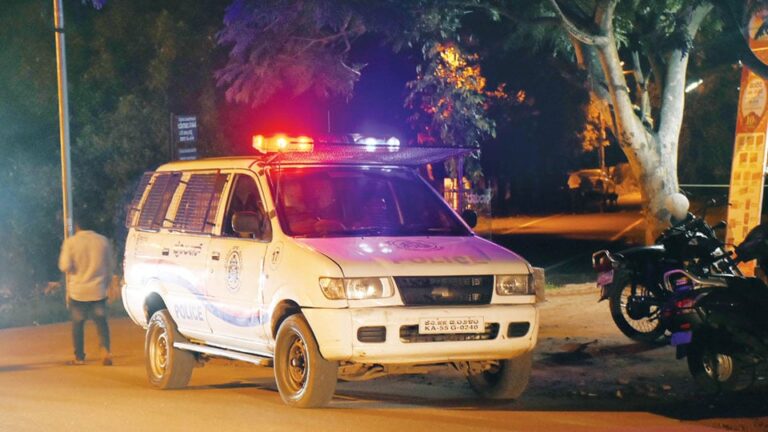
As the sun sets, the physical and psychological landscape of a city shifts. For law enforcement, the “graveyard shift” presents a unique set of challenges where reduced visibility, lower staffing levels, and higher risks of certain crimes intersect.
When police patrolling becomes minimal during these hours, it creates a “security vacuum” that can lead to increased response times and a heightened fear of crime among citizens.
The Challenges of Minimal Night patrols
Minimal patrolling at night is rarely a choice but rather a result of systemic constraints. Understanding these hurdles is the first step toward finding a solution.
* Resource and Staffing Shortages: Many departments face “power shift” dilemmas, where they must decide whether to concentrate officers during the day to handle administrative and traffic duties or at night to handle high-priority crimes.
* Reduced Natural Surveillance: During the day, the presence of pedestrians and open businesses acts as “informal surveillance.” At night, this vanishes, making police visibility the only significant deterrent.
* Officer Fatigue and Safety: Working in darkness increases the risk of tactical errors. Dimly lit environments make it harder to identify threats, and the physiological toll of shift work can impact an officer’s reaction time and decision-making.
Strategic Solutions: Beyond “More Boots on the Ground”
Simply adding more officers is often financially impossible. Instead, departments are turning to intelligent resource allocation and integrated technology.
1. Hotspot Policing and Predictive Analytics
Instead of random patrolling, agencies are using “Crime Forecasting” software. By analyzing historical data, police can identify specific “hotspots” where crime is most likely to occur at night.
* The Impact: Concentrating patrols in a small, high-risk area for just 15–20 minutes at random intervals can create a “residual deterrence” that lasts long after the squad car has left.
2. The “Lighting as a Guardian” Strategy
Research shows that improved street lighting is one of the most effective ways to supplement low police presence.
* Visibility: Better lighting makes police vehicles more visible to potential offenders, magnifying the perceived presence of the law.
* Community Use: Brightly lit areas encourage “prosocial” use of space (people walking dogs, late-night joggers), which restores the informal surveillance lost at sundown.
3. Technological Force Multipliers
When human officers are few, technology acts as an extra set of eyes:
* Thermal Imaging & Drones: These tools allow officers to survey large areas (like parks or industrial zones) without entering them blindly, maintaining the element of surprise and increasing safety.
* Gunshot Detection Systems: Sensors can instantly alert dispatch to the exact location of a discharge, bypassing the delay of waiting for a citizen to call 17-911.
A Path Forward: The “Hybrid” Model
The most effective solution to minimal night patrolling is a hybrid approach that combines a visible police presence with “smart city” infrastructure.
By integrating LED lighting, AI-driven crime mapping, and rapid-response tactical units, cities can create a safety net that doesn’t rely solely on the number of officers on the street.
Ultimately, the goal is to move from a reactive stance (waiting for a call) to a proactive stance (preventing the crime before it happens through visible and intelligent presence).

A Visual Tribute to theTelangana Armed Struggle“Golla Ramavva”

Streaming on ETV Win
from January 25
“Golla Ramavva” is a powerful visual adaptation of the Telangana Armed Struggle, based on the celebrated work written by the pride of the Telugu people, former Prime Minister of India and Bharat Ratna awardee Late P. V. Narasimha Rao.
Directed by Mullapudi Vara, son of renowned writer Mullapudi Venkata Ramana, this stirring heroic saga has been produced on a prestigious scale by Sucheta Dream Works productions and Varma Dream Creations, with Ram Vishwas Hannurkar and Raghavendra Varma (Bujji) as producers. Noted media professional Azhar Shaikh, who has worked with several leading media organizations, plays a key role as Executive Producer, and has also contributed to the lyrics, adding special distinction to the project.
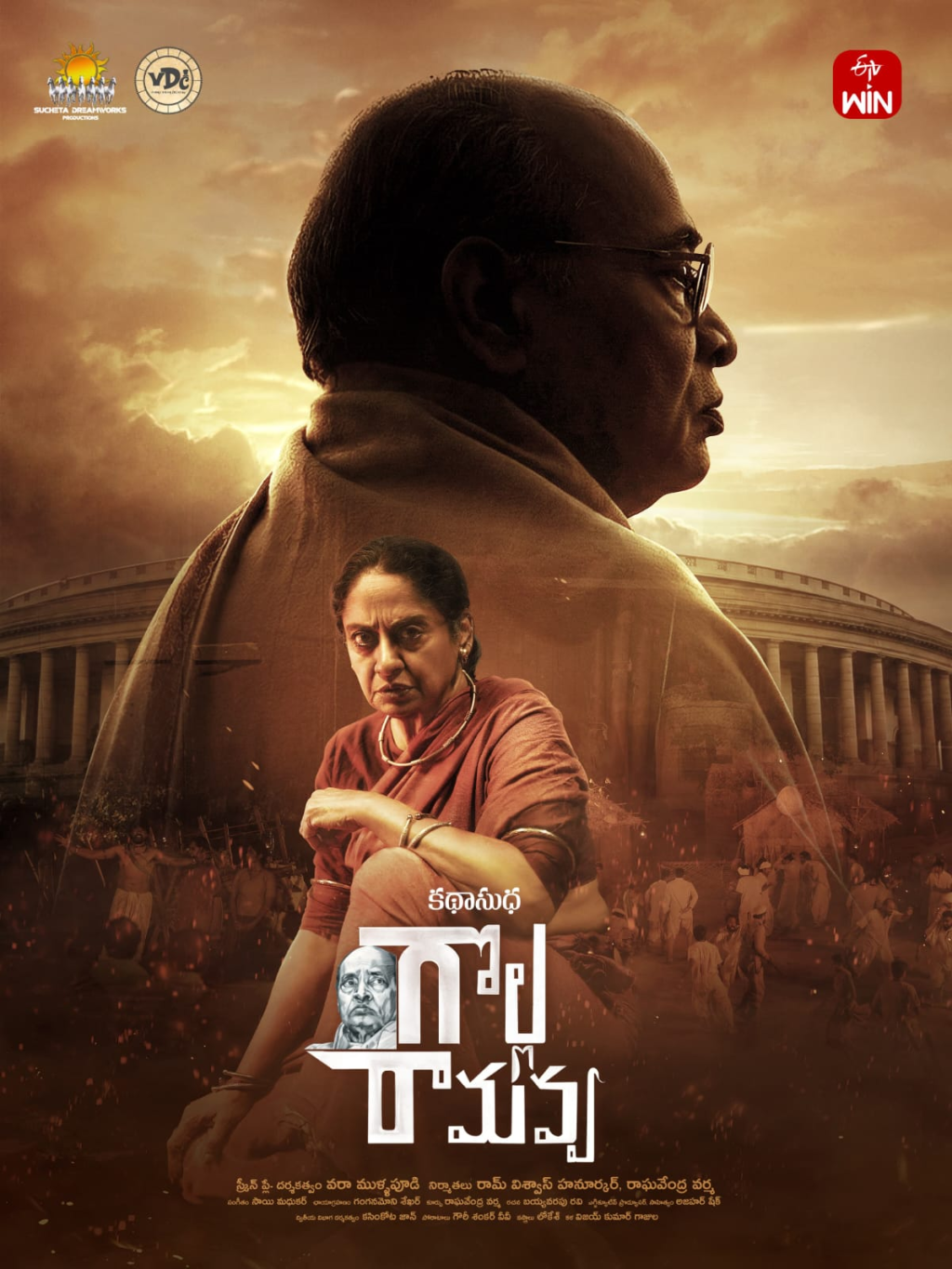
The same team that earlier delivered the well-received ETV Win film “Mouname Nee Bhasha” now returns with “Golla Ramavva”, which will begin streaming on January 25 exclusively on ETV Win. Popularly known as “Telugu Seethamaalakshmi”, Talluri Rameshwari essays the title role, promising a performance that will remain etched in memory.
Technical & Creative Team: PRO: Dheeraj – Appaji, Music: Sai Madhukar, Cinematography: Gangamoni Shekhar, Editing: Raghavendra Varma, Writing: Bayyavarapu Ravi, Executive Producer & Lyrics: Azhar Shaikh, Producers: Ram Vishwas Hannurkar – Raghavendra Varma (Bujji),
Screenplay & Direction: Mullapudi Vara.
A compelling historical drama that brings courage, sacrifice, and the spirit of Telangana to life — “Golla Ramavva”, streaming from January 25 on ETV Win!!


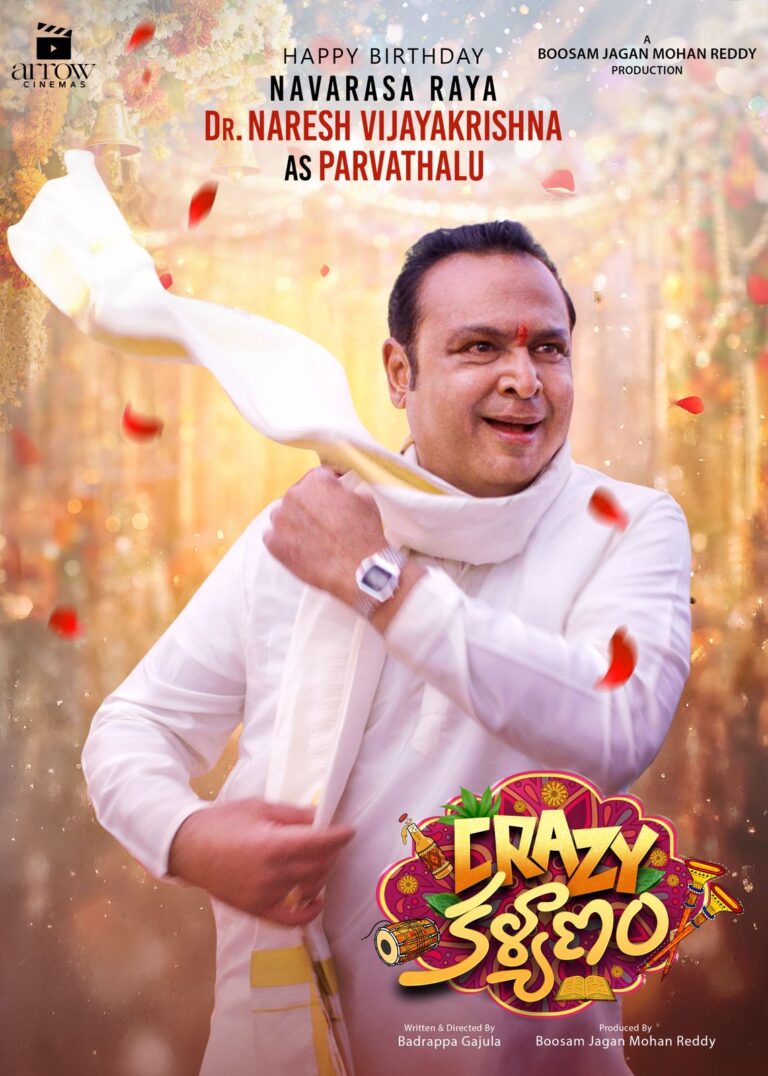
Versatile actor Dr. Naresh VK Birthday Special Poster has been released from Crazy Kalyanam a complete entertainer coming soon
Crazy Kalyanam stars versatile actor Naresh Vijaya Krishna, beautiful Anupama Parameswaran, Tharun Bhascker, and Akhil Uddemari of Raj Weds Rambai fame in the lead roles.
The film is being produced by passionate producer Boosam Jagan Mohan Reddy under the Yaro Cinemas banner as Production No. 2. The film is directed by Badrappa Gajula.
On the occasion of versatile actor Naresh VK’s birthday today, the makers released a special poster wishing him a happy birthday. In the poster, Naresh VK looks impressive in a traditional avatar as the character Parvataalu.
The film is said to be a complete entertainer with an engaging story that revolves around a wedding. The shooting of Crazy Kalyanam was carried out across several rural locations in Telangana. Suresh Bobbili is providing the music for this film as well.
Cast:
Naresh VK, Anupama Parameswaran, Tharun Bhascker, Akhil Uddemari, and others
Technical Team:
Costume Designer: J. Gayathri Devi
Art Director: Sai Kadhir
Production Designer: Sripal Macharla
Executive Producer: Akhil Sai Srimurthy
Choreographer: Eshwar Penti
Action: Dragon Prakash
Lyrics: Gorati Venkanna, Chaitanya Prasad, Kasarla Shyam
Editor: Shravan Katikneni
Director of Photography: Shyam Dupati
Music Director: Suresh Bobbili
Screenplay: Srinivasa Ravindra (MSR)
PRO: GSK Media (Suresh – Sreenivas)
Producer: Boosam Jagan Mohan Reddy
Story, Screenplay, dialogues and Direction: Badrappa Gajula

Potable Water Crisis in Hyderabad
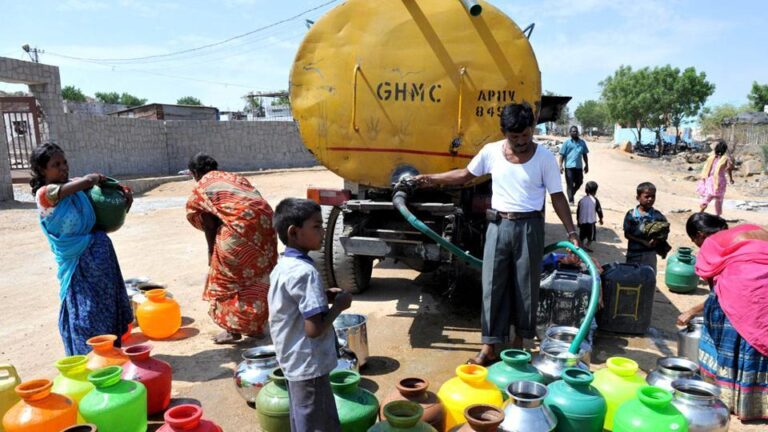
As of early 2026, Hyderabad is navigating a complex water landscape. While the city has made significant strides in piped water coverage, it faces a “silent crisis” driven by rapid urbanization, pollution of local reservoirs, and a plummeting groundwater table.
The Potable Water Crisis in Hyderabad (2026)
The city’s water woes are no longer just about “scarcity” but are increasingly about quality and sustainability.
1. Contamination of Primary Sources
Recent studies in 2026 have revealed that four of Hyderabad’s six major drinking water sources—Osmansagar, Himayatsagar, Godavari, and Krishna—are critically polluted.
* The Cause: Untreated sewage and industrial effluents from surrounding residential and industrial hubs (like Medak) flow directly into these reservoirs.
* The Risk: High levels of fecal coliform and heavy metals like cadmium and lead have been detected, pushing the Water Quality Index (WQI) to “very poor” levels.
2. Groundwater Depletion (The “Red Zone”)
By January 2026, groundwater levels in several mandals—including Ameerpet, Kukatpally, and Bachupally—have dropped into the “red zone,” with water tables falling below 20 meters.
* Urban Heat & Concrete: Rapid construction has paved over natural recharge zones, meaning even a good monsoon fails to replenish the aquifers.
* Over-extraction: The mushrooming of illegal borewells in high-rise corridors has led to a drop of 2-3 feet in groundwater levels compared to the previous year.
3. Aging Infrastructure
Nearly 35-40% of the city’s water is lost during distribution. This is due to corroded, decades-old pipelines that suffer from frequent leakages. Often, these water lines run dangerously close to sewerage networks, leading to cross-contamination.
Strategic Solutions and the 2026 Action Plan
The Hyderabad Metropolitan Water Supply and Sewerage Board (HMWSSB) and the state government have initiated several multi-pronged strategies to combat these issues.
Infrastructure & Supply Expansion
* Godavari Phase 2: A ₹7,000 crore project is underway to bring additional Godavari water to the city, aiming for a year-round, 24/7 supply by late 2027.
* Smart Monitoring: The installation of flow meters and IoT-based sensors to detect “hidden leaks” and eliminate illegal connections is being scaled up across the GHMC area.
Groundwater Recharge: “One House, One Recharge Pit”
To combat the falling water table, the government has mandated:
* Mandatory Recharge Pits: Every house built on 200 sq. yards or more must have a rainwater harvesting pit.
* Injection Borewells: Converting thousands of defunct borewells into injection wells to channel rainwater directly into the ground.
Ecosystem Restoration
* Musa River Revival: Phase 1 of the Musi River restoration (starting March 2026) aims to clean a 21 km stretch, reducing the toxic load on the city’s ecosystem.
* Lake Protection (TDR Policy): New policies offer “Transferable Development Rights” to landowners who surrender land for lake conservation, incentivizing the protection of buffer zones from encroachment.
Decentralized Solutions
Educational institutions like IIIT-Hyderabad and MANUU have set a blueprint for the city. By creating biodiversity ponds and recycling 100% of their “gray water” for landscaping, these campuses have become nearly “net-zero” in water consumption, avoiding tankers even in peak summer.
The path to a water-secure Hyderabad lies in moving away from a “tanker-dependent” mindset toward one of circular water management—where every drop is harvested, treated, and reused.