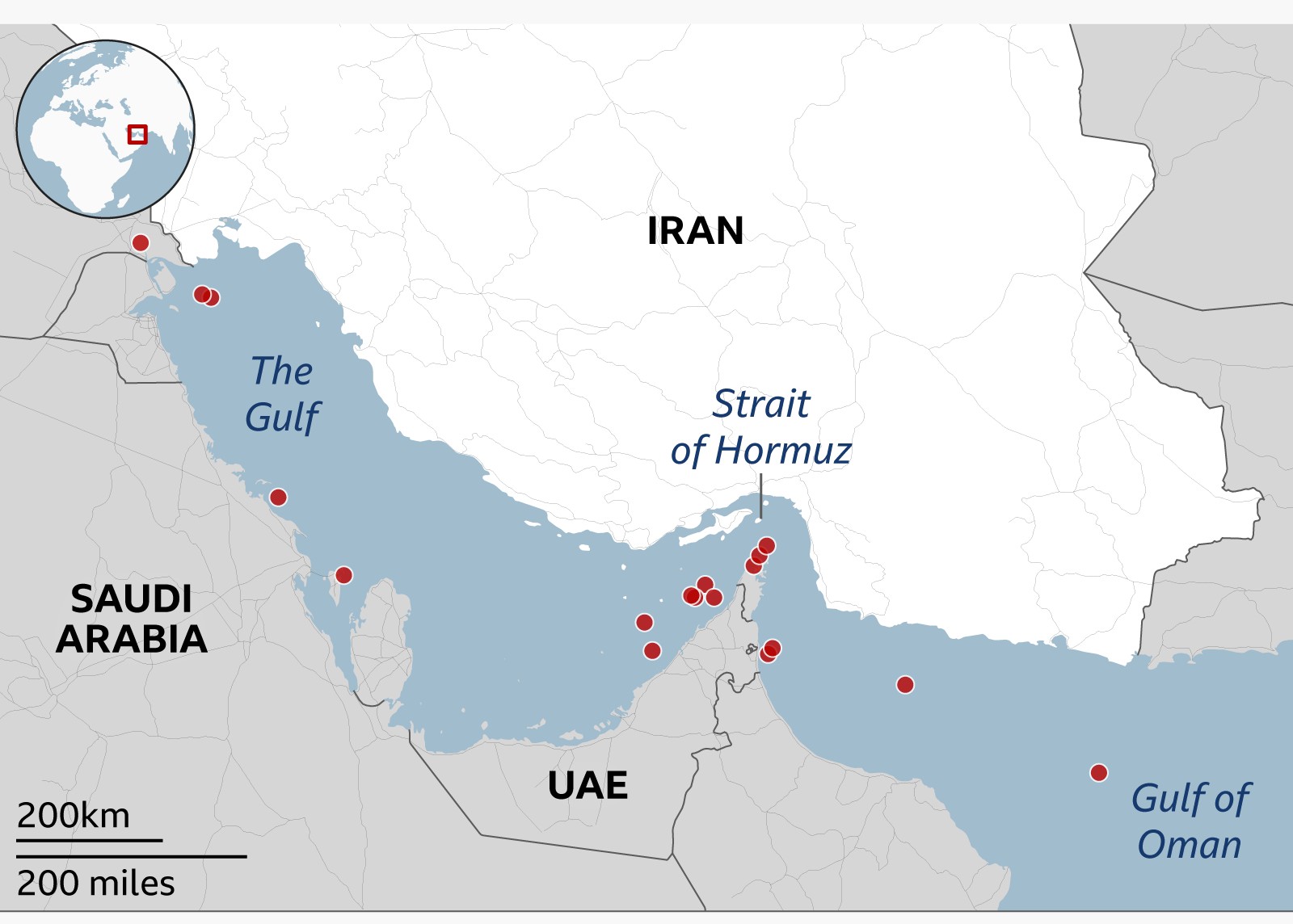

The Strait of Hormuz, a narrow maritime passage between Iran and Oman, has once again emerged as the most critical flashpoint for the global economy. Recent geopolitical tensions and military escalations in the Middle East have raised serious concerns about disruptions in this vital waterway—through which a significant portion of the world’s energy supplies flows. The consequences of any prolonged disruption are far-reaching, with the potential to destabilize global markets, trigger inflation, and slow economic growth worldwide.
A Critical Artery of Global Energy
The Strait of Hormuz is widely regarded as the world’s most important oil chokepoint. It carries around 20–25% of global seaborne oil trade and large volumes of liquefied natural gas (LNG) . On an average day, nearly 20 million barrels of crude oil and petroleum products pass through this narrow corridor .
This makes the global economy heavily dependent on uninterrupted shipping through the strait. Any disruption—whether due to conflict, blockades, or security threats—immediately tightens global supply.
Immediate Impact: Oil Shock and Price Surge
Recent developments show how quickly markets react. The closure or disruption of the strait has already led to:
Sharp spikes in crude oil prices
Increased shipping and insurance costs
Supply shortages in key energy-importing regions
In fact, analysts describe the current crisis as one of the largest oil supply disruptions in history, removing millions of barrels per day from the market . In some cases, alternative crude prices have surged dramatically due to panic buying and supply gaps .
Such price shocks ripple across the global economy because oil is a foundational input for transportation, manufacturing, and energy production.
Global Inflation and Economic Slowdown
Higher oil prices directly translate into higher costs of goods and services. Fuel is central to logistics and industrial production, so disruptions quickly drive up:
Transportation costs
Food prices
Manufacturing expenses
For example, rising diesel prices have already begun affecting freight and supply chains, raising concerns about broader economic slowdown .
Economists warn of a possible stagflation scenario—a combination of high inflation and low growth—if the disruption persists .
Impact on Global Trade and Supply Chains
The Strait of Hormuz is not just about oil—it is a major global trade artery. Disruptions affect:
Shipping routes and delivery timelines
Availability of fertilizers and chemicals
Industrial supply chains
The United Nations has warned that any prolonged closure could severely disrupt global trade flows and maritime logistics . Tankers being stranded or rerouted increases transit times and costs, creating bottlenecks across industries.
Severe Consequences for Oil-Dependent Economies
Countries heavily reliant on oil exports or imports face the biggest risks:
Oil-exporting nations like Iraq could suffer revenue collapse and fiscal instability
Import-dependent economies, especially in Asia, face inflation and currency pressure
For India, even a $10 increase in oil prices can reduce GDP growth and raise inflation, highlighting its vulnerability .
Financial Market Volatility
Energy shocks quickly spread to financial markets. Stock markets, currencies, and bonds react sharply to uncertainty in energy supply.
Recent disruptions have already caused:
Volatility in global stock markets
Rising energy sector profits but broader market instability
Increased investor uncertainty
This interconnectedness shows how a regional conflict can trigger a global financial contagion.
Strategic Responses and Mitigation Efforts
Governments and global institutions are attempting to cushion the impact through:
Release of strategic oil reserves
Diversification of energy supply routes
Increased production from non-Gulf regions
The International Energy Agency (IEA) has even undertaken large-scale reserve releases to stabilize markets . However, these are short-term measures and cannot fully offset a prolonged disruption.
Conclusion
The Strait of Hormuz remains a geopolitical pressure point with global economic consequences. Its disruption is not merely a regional issue but a systemic risk to the world economy.
From soaring oil prices and inflation to trade disruptions and financial instability, the ripple effects are profound. As tensions persist, the situation underscores a crucial lesson: global economic stability is deeply tied to energy security and maritime chokepoints.
A prolonged crisis in the Strait of Hormuz could redefine global energy dynamics—and potentially reshape the economic order itself.
Strait of Hormuz Disruption Threatens to Shake Global Economy