

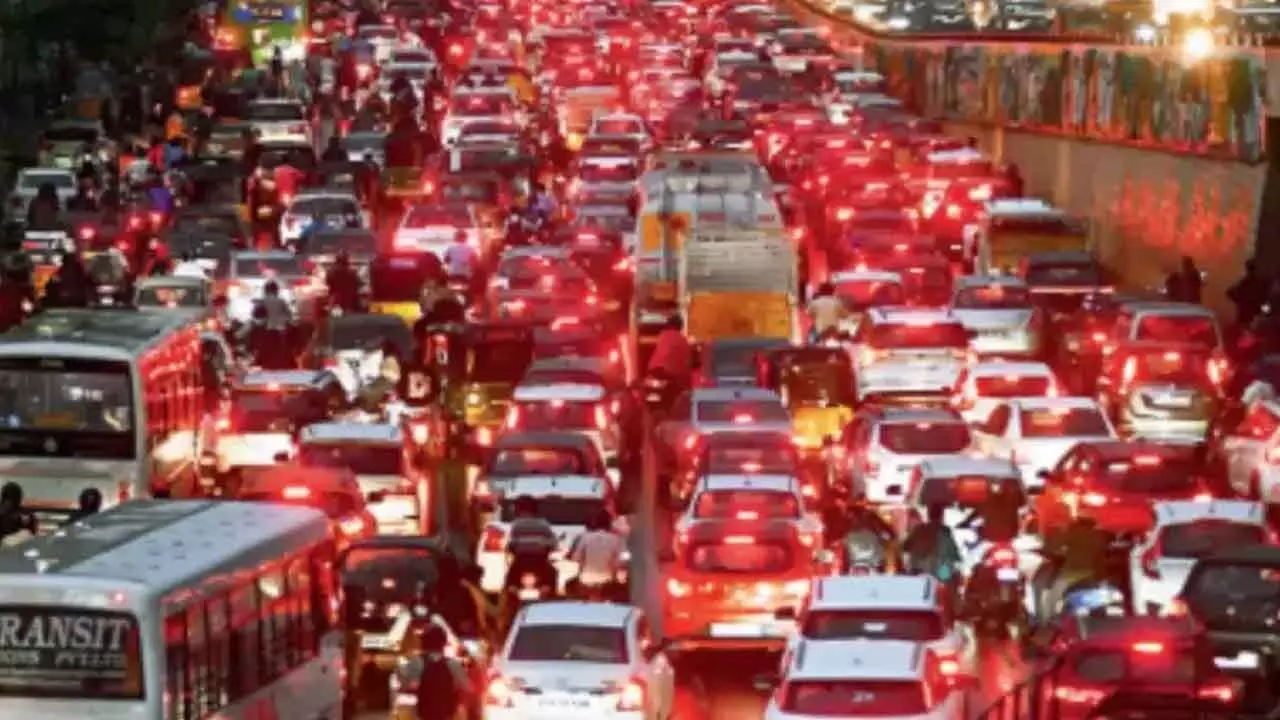
In India’s rapidly growing urban landscapes—specifically in cities like Hyderabad—traffic is often viewed as a math problem: too many cars, too few roads.
However, a significant part of the “traffic menace” isn’t just about the volume of engines; it’s about the unauthorized occupancy of the “right of way.”
From vagabonds seeking shelter to “timepass” travelers loitering on busy stretches, the misuse of road infrastructure creates a ripple effect of congestion, safety risks, and urban decay.
The Invisible Roadblocks: How Loitering Impacts Traffic
1. Encroachment of Pedestrian Spaces
When vagabonds or unauthorized dwellers set up makeshift shelters on footpaths, they don’t just occupy a few square feet—they force pedestrians onto the main driveway. In Hyderabad’s Old City or the congested lanes of Madina Market, this “pedestrian spillover” slows vehicle speeds to a crawl. A single person walking on the road can reduce the effective capacity of a lane by up to 30%.
2. The “Timepass” Bottleneck
“Timepass” travelers—individuals who park their vehicles on main roads to chat, eat at roadside “bandis” (food stalls), or simply loiter—create artificial bottlenecks.
* Haphazard Parking: Even a two-minute stop to grab a snack can trigger a “shockwave” jam that lasts twenty minutes.
* Visual Distraction: Roadside loitering often leads to “rubbernecking,” where passing drivers slow down to see the commotion, further stalling the flow.
3. Obstruction of Critical Junctions
Vagabonds often congregate at major intersections or under flyovers. Their presence, while often a symptom of social neglect, creates safety hazards. Sudden movements near high-speed traffic lead to emergency braking, which is a primary cause of rear-end collisions and “phantom” traffic jams in Indian cities.
The Hyderabad Case Study: A City at its Limit
Hyderabad currently holds the record for the highest vehicle density among major Indian cities. With nearly 86 lakh vehicles, the city’s 900 km of main roads cannot afford even a 5% loss in space.
* The IT Corridor: Tech parks in Hitech City face gridlock not just from commuters, but from unregulated “quick-stop” vendors serving the floating population.
* The Old City: Narrow roads are further constricted by informal commercial activity and lack of dedicated vending zones, making midnight traffic jams a common occurrence.
How to Prevent the Menace: A Multi-Pronged Strategy
To reclaim the roads, the solution must balance stricter enforcement with social compassion.
1. Designated Vending & Living Zones
The government must move beyond simply “clearing” encroachers.
* Rehabilitation: Provide designated night shelters for the homeless away from high-traffic corridors.
* Vending Zones: As seen in recent urban planning proposals, creating specific “Vending Zones” with amenities like water and trash disposal keeps hawkers off the main carriageway.
2. “No-Tolerance” Loitering Corridors
Identify high-congestion zones (like the Ameerpet-Punjagutta stretch) as Strict Enforcement Zones.
* AI Surveillance: Use CCTV and AI to detect unauthorized stationary vehicles and issue immediate e-challans.
* Physical Barriers: Install high-quality bollards and continuous dividers to prevent “timepass” parking and mid-road U-turns.
3. Pedestrian-First Infrastructure
If footpaths are wide, clean, and unobstructed, people will use them.
* Elevated Walkways: In areas like Hitech City, skywalks can completely separate human movement from vehicular flow.
* Smart Parking: Implementing “Paid Parking Only” on-street policies discourages casual loitering.
> Key Statistic: According to the National Urban Transport Policy, shifting just 10% of on-street parking to public open spaces can increase traffic flow efficiency by nearly 20%.
Moving Forward
The traffic menace isn’t just a failure of engineering; it’s a failure of space management. By treating the road as a moving artery rather than a stationary community hub, India can breathe life back into its choked cities.

