

This honor doesn’t belong to me alone It belongs to everyone in our Tollywood
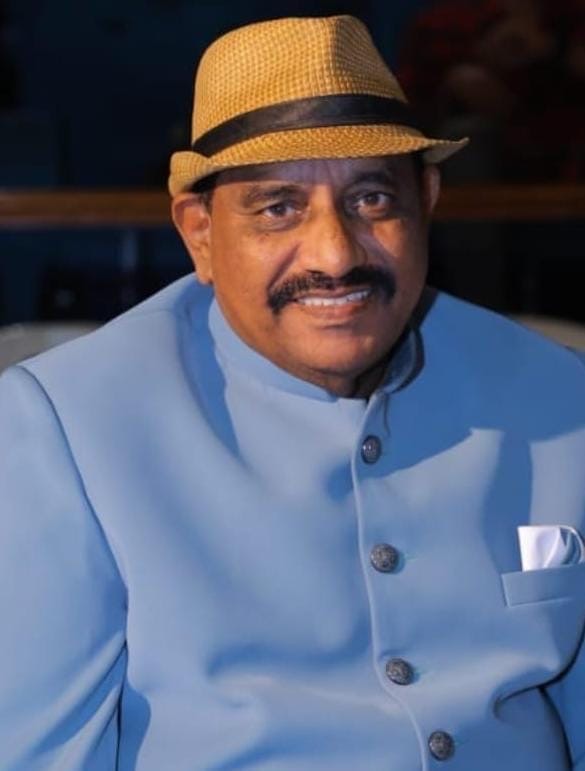
“This honor doesn’t belong to me alone
It belongs to everyone in our Tollywood
This birthday is a
very special one for me.
Achieving a double century as a producer has been my life’s ambition.
– World Record-Holding Producer
Tummalapalli Rama Satyanarayana
While Dr. D. Ramanaidu entered history for producing films in the highest number of languages, Tummalapalli Rama Satyanarayana – the head of Bhimavaram Talkies – set a world record by launching 15 films on a single day. Moreover, he is moving forward with firm determination to bring all these 15 films to audiences within a year.
On the occasion of his birthday (September 10), this veteran producer of over 100 films shared his thoughts in a special media interaction.
Tummalapalli said he considers it his good fortune that he could bring such a great honor to Telugu cinema. However, he added that this achievement is not his alone, but belongs to hundreds of people who stood by him throughout his journey.
He shared that regular shooting has already started for some of these 15 films, such as “Yandamoori Kathalu”, “KPHB Colony”, “Maa Nanna Hero”, and “Mahanaga”, while the rest are currently in pre-production.
He also revealed plans to produce a big-budget film with a renowned director later this year.
Celebrating his birthday while also completing 20 years in the film industry, he said this birthday holds immense personal significance.
Reflecting emotionally, he shared that he never imagined he would reach such heights in the industry, especially after facing many struggles early in his career. He credited his family’s unwavering support for his success.
He concluded by saying that his life goal is to produce 200 films as a producer!
Government And Private buses nuisance on Indian roads
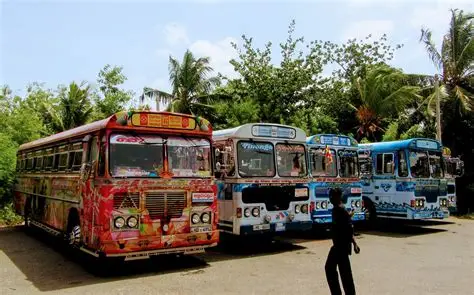
Buses, both government and private, are an indispensable part of India’s transportation ecosystem, carrying millions of people daily. However, their pervasive presence on Indian roads often comes at a significant cost, leading to widespread public nuisance, traffic congestion, and a serious threat to road safety.
While they are a vital service, their operation is frequently plagued by issues that require immediate attention from authorities and the public alike.
The Problem of “Public Nuisance”
The nuisance caused by buses on Indian roads is multifaceted and deeply ingrained in the traffic landscape. At its core, the issue is an “unreasonable interference” with the public’s right to safe and free movement, a concept recognized in legal frameworks. This interference manifests in several ways:
- Traffic Congestion and Illegal Parking: A common sight in major cities is buses hogging road space. Private buses, in particular, are often found parked illegally on main roads, waiting to pick up or drop off passengers. This indiscriminate parking blocks lanes, especially during peak hours, and creates bottlenecks that can bring entire areas to a standstill. Even in cities with designated bus stands, buses may park and wait on the main road, making them a primary cause of gridlock.
- Reckless Driving and Lack of Lane Discipline: The race for passengers, particularly among private operators, often leads to reckless and dangerous driving. Bus drivers are notorious for overspeeding, abrupt lane changes, and cutting off other vehicles. This disregard for traffic rules and lane discipline not only contributes to congestion but also poses a serious threat to motorists and pedestrians.
- Noise Pollution: The excessive use of horns, including loud pressure horns, by bus drivers is a major source of noise pollution. This is a public nuisance that affects the health and well-being of residents and commuters, and has been the subject of court rulings emphasizing a citizen’s right to leisure and silence.
- Safety Hazards: The aggressive and often un-regulated operation of buses directly impacts road safety. In a country where road accidents are a leading cause of death, especially among young men, buses contribute to this grim statistic. While overspeeding by all vehicle types is a major killer, the sheer size and momentum of buses make accidents involving them particularly fatal.
A Systemic Failure, Not Just a Bus Problem
The nuisance caused by buses is not an isolated problem of a few errant drivers or operators; it’s a symptom of a broader systemic failure in traffic management and enforcement. Critics argue that buses are often made scapegoats for traffic chaos that is caused by a multitude of factors, including:
- Inadequate Enforcement: The lack of consistent and visible traffic policing is a primary reason why traffic rules are flouted with impunity. Drivers know they can get away with violations, leading to a culture of indiscipline.
- Poor Infrastructure: Many cities lack the proper infrastructure to support the massive volume of bus traffic. The absence of dedicated bus bays, well-maintained bus stops, and private bus stands forces operators to use main roads for stops, leading to congestion.
- Lack of Coordination: There is often a disconnect between traffic police and transport departments. While one may be responsible for enforcing rules, the other is responsible for providing the infrastructure and regulations that make compliance possible.
The Way Forward
Addressing the bus nuisance on Indian roads requires a holistic and multi-pronged approach that goes beyond simply blaming the operators. - Stricter Enforcement and Fines: The Motor Vehicles Act, 1988, provides authorities with the power to regulate, restrict, and prohibit the movement of vehicles to ensure public safety. This legal framework must be used more effectively to crack down on traffic violations by bus drivers, including overspeeding, illegal parking, and disregard for lane discipline.
- Infrastructure Development: Cities need to invest in designated bus bays and private bus stands to eliminate the need for buses to park and wait on main roads. This would not only ease congestion but also make it safer for passengers to board and alight.
- Use of Technology: The integration of technology can play a crucial role. Real-time dashboards, like the ones being proposed in states like Odisha and Assam, can help authorities monitor traffic, identify high-risk areas, and implement targeted interventions.
- Public Awareness Campaigns: While enforcement is key, public awareness is equally important. Campaigns can educate both drivers and passengers about the importance of road safety and the consequences of reckless behavior.uses are a lifeline for millions in India. The goal should not be to target them, but to manage their operation in a way that minimizes public nuisance and maximizes safety.
- Buses are a lifeline for millions in India. The goal should not be to target them, but to manage their operation in a way that minimizes public nuisance and maximizes safety.
- By addressing the root causes and implementing a combination of strict enforcement, improved infrastructure, and public awareness, Indian roads can become safer and more manageable for everyone.

Bhadrakali: Our Best Opportunity – Trupti Ravindra – Riya Jithu

Tamil actor Vijay Antony is returning with his film Bhadrakali.
Directed by Arun Prabhu, the movie is being presented to Telugu audiences by Ramanjaneyulu Javvaji under the Sarvanth Ram Creations banner, with Vijay Antony Film Corporation and Meera Vijay Antony as presenters.
Bhadrakali is set to be released on September 19th. On this occasion, the film’s heroines, Trupti Ravindra and Riya Jithu, spoke with the media.
Trupti Ravindra
Actress Trupti Ravindra said, “I am from Maharashtra. This is my first film as a heroine in Tamil. Before entering the film industry, I worked as a software engineer. Even during my engineering days, I had a keen interest in movies.
I auditioned for theater roles, and acting in front of the camera brought me a lot of joy. I also did some TV commercials. I received an audition call for this film from Arun’s direction team, and after the audition and a look test, I was finalized for the character. I am playing a very relatable character in this film.”
Riya Jithu
Another heroine, Riya Jithu, stated, “I am a Malayali. I grew up watching Tamil and Malayalam movies. I have experience as a child artist, having acted in nearly 15 films. After taking a break from movies to focus on my studies, I returned to the industry. I am very happy to be a part of Vijay Antony’s 25th film.”
NBK rings the bell at NSE
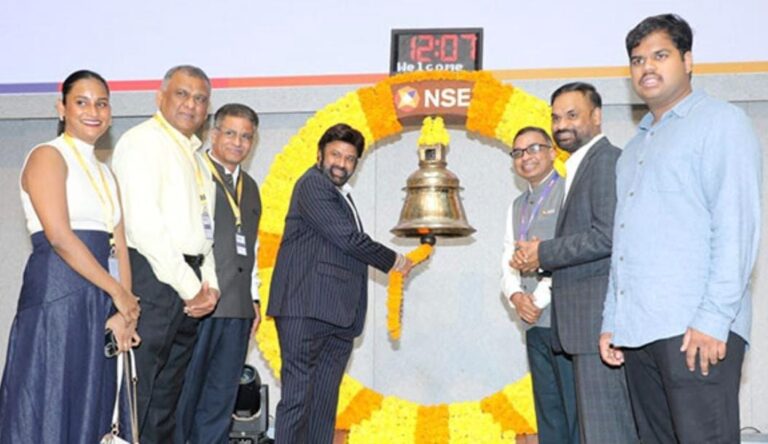
Nandamuri Balakrishna, the ‘God of Masses,’ has once again made history. He has become the first South Indian actor to ring the bell at the National Stock Exchange (NSE), a prestigious institution in the country.
This historic event took place during his visit to the NSE headquarters, where he was accompanied by representatives from the Basavatarakam Indo-American Cancer Hospital & Research Institute.
The honor of ringing the bell at the NSE is typically reserved for industrial giants, reformers, and individuals of national importance, making Balakrishna’s inclusion on this list a significant achievement.
It is also known that Balakrishna was recently featured in the World Book of Records. His highly anticipated film, Akhanda 2, is set to be released during Sankranti.
Plight of Indian government Hospitals
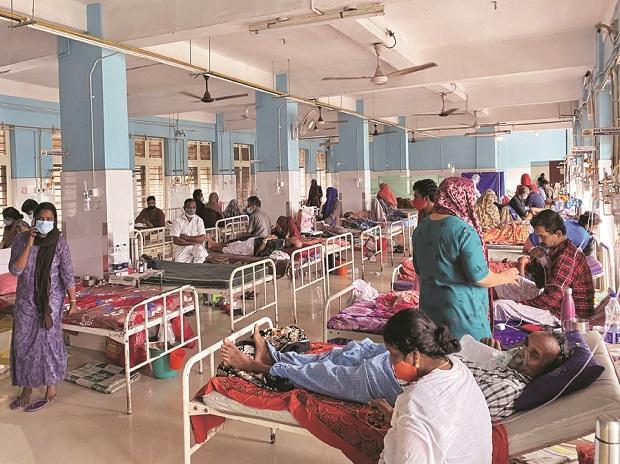
India’s government hospitals, the backbone of the public healthcare system, are facing significant challenges.
While they are designed to provide affordable or free care to millions, they are often plagued by issues of underfunding, a severe shortage of staff and resources, and decaying infrastructure.
These problems lead to long wait times, overcrowding, and a decline in the quality of care, ultimately impacting the health and well-being of the population, especially the most vulnerable.
Understaffing and Overburdened Doctors
One of the most critical issues is the severe shortage of medical professionals. The doctor-to-patient ratio in India is well below the World Health Organization (WHO) recommendation, with a significant deficit of doctors, nurses, and paramedical staff, particularly in rural and remote areas.
This shortage places immense pressure on the existing staff. Resident doctors and nurses often work grueling shifts that can extend beyond 24 hours, leading to burnout, emotional stress, and a higher risk of medical errors.
The lack of adequate support staff also means that doctors are forced to take on administrative and non-clinical duties, further compromising patient care.
Crumbling Infrastructure and Lack of ResourcesMany government hospitals suffer from a severe lack of proper infrastructure and essential resources. This includes:
* Inadequate Facilities: A lack of proper beds, sanitation, and hygienic conditions is a common sight. Outdated or non-functional equipment is a significant hindrance, affecting everything from basic diagnostics to complex surgical procedures.
* Medicine Shortages: Patients are frequently required to purchase medicines and supplies from private pharmacies because the hospital’s stock is insufficient or unavailable. This defeats the purpose of providing free healthcare and adds a significant financial burden to low-income families.
* Poor Maintenance: Many hospitals are in a state of disrepair, with broken doors, unhygienic washrooms, and poor lighting. These conditions are not only uncomfortable for patients but also pose a health risk.
Many government hospitals suffer from a severe lack of proper infrastructure and essential resources. This includes:
* Inadequate Facilities: A lack of proper beds, sanitation, and hygienic conditions is a common sight. Outdated or non-functional equipment is a significant hindrance, affecting everything from basic diagnostics to complex surgical procedures.
* Medicine Shortages: Patients are frequently required to purchase medicines and supplies from private pharmacies because the hospital’s stock is insufficient or unavailable. This defeats the purpose of providing free healthcare and adds a significant financial burden to low-income families.
* Poor Maintenance: Many hospitals are in a state of disrepair, with broken doors, unhygienic washrooms, and poor lighting. These conditions are not only uncomfortable for patients but also pose a health risk.
The Urban-Rural Divide and Inequity
The challenges are compounded by a stark urban-rural divide. While some central and state government-run hospitals in major cities may have better infrastructure and resources, the situation in district and rural hospitals is often dire.
Doctors are reluctant to work in rural areas due to low salaries, a lack of facilities, and limited opportunities for career advancement. This leaves a vast population with little to no access to quality healthcare, forcing them to either travel long distances to urban centers or rely on uncertified practitioners.
Government Initiatives and the Way Forward
Despite the challenges, the government has launched several initiatives to improve the public healthcare system. Schemes like Ayushman Bharat aim to provide health insurance to the poor, while the Pradhan Mantri Ayushman Bharat Health Infrastructure Mission (PM-ABHIM) focuses on strengthening public health infrastructure.
The government is also trying to increase the number of medical colleges and health centers to address the staff shortage.
However, a comprehensive and sustained effort is needed. This includes:
* Increased Budgetary Allocation: A higher percentage of the GDP needs to be allocated to healthcare to improve infrastructure, salaries, and resources.
* Strategic Recruitment and Retention: Incentives for doctors to work in rural areas and faster, more transparent recruitment processes are essential.
* Accountability and Transparency: Better monitoring of funds and hospital management can curb corruption and ensure resources are used efficiently.
Improving the plight of government hospitals in India is not just a policy matter but a humanitarian necessity to ensure every citizen has access to basic, quality healthcare.

Mana Shankar Varaprasad garu is Smitten

Megastar Chiranjeevi and hit machine Anil Ravipudi’s most awaited family entertainer, “Mana Shankara varaprasad garu,” is being shot at a rapid pace. The film is being produced by Sahu Garapati on the Shine Screens banner, in collaboration with Sushmita Konidela’s Gold Box Entertainments. Smt. Archana is presenting the film.
Starting today, a romantic song featuring Megastar Chiranjeevi and Nayanthara will be filmed in Hyderabad. Bheems Ceciroleo has created a fantastic album for this movie. Dance master Vijay Polanki will be choreographing the song.
Sameer Reddy is the cinematographer, Tammiraju is the editor, A.S. Prakash is the art director, and S. Krishna and G. Adi Narayana are co-writers for the film. S. Krishna is the executive producer, the film is set to arrive for the Sankranti festival in 2026.