

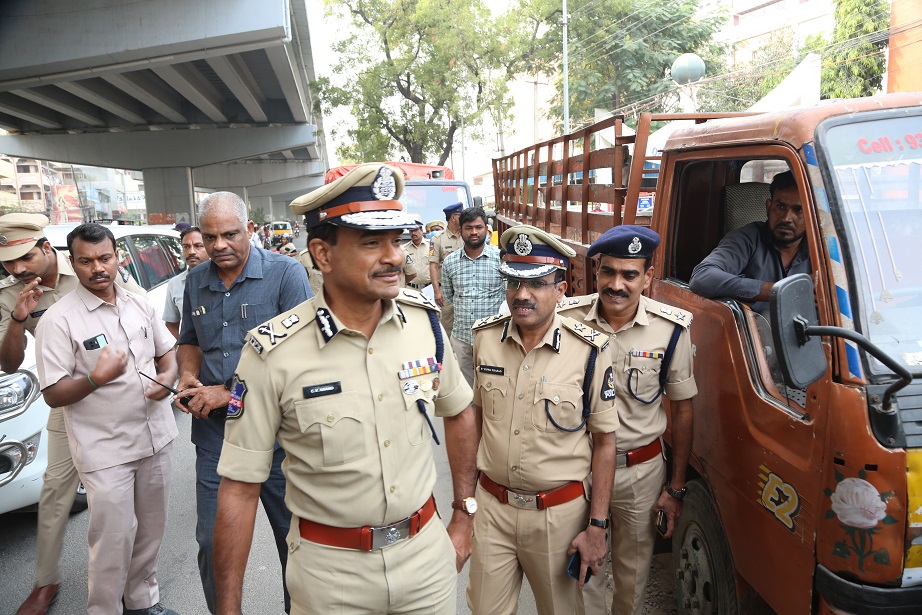
The Hyderabad Traffic Police have achieved significant success with “Operation ROPE” (Removal of Obstructive Parking and Encroachments), a multi-pronged strategy to combat traffic congestion and enhance road safety in the city. Launched to address the growing vehicular density and related traffic woes, the operation has yielded impressive results by focusing on a holistic approach that includes enforcement, education, and engineering.
A Proactive Approach to a Growing Problem
With the number of vehicles in Hyderabad increasing at an alarming rate, the city’s traffic infrastructure was under immense strain. Illegal parking, footpath encroachments, and a lack of lane discipline were major contributors to traffic jams, delays, and a rise in road accidents. Recognizing the need for a comprehensive solution, the Hyderabad Police Commissioner, C.V. Anand, personally led Operation ROPE, a campaign aimed at reclaiming public road space and instilling a sense of discipline among commuters.
Key Pillars of Success
Operation ROPE’s success is a testament to its well-defined strategy, which encompasses the “4 E’s” of traffic management:
- Enforcement: This was the most visible aspect of the operation. Traffic police intensified their drives against a range of violations, including wrong-side driving, illegal parking, and blocking free lefts. They deployed more towing cranes and used clamps to penalize obstructive parking. The police also cracked down on encroachments by vendors and commercial establishments, clearing footpaths and carriageways to ensure smooth traffic flow. The sheer number of challans issued, particularly for stop-line and free-left violations, indicates the seriousness of the enforcement drive.
- Education: The police understood that enforcement alone wouldn’t solve the problem. They conducted extensive campaigns to educate the public on the importance of traffic discipline and road safety. Commuters were made aware of the hazards of their violations and the collective benefit of following traffic rules. This public awareness campaign was crucial in shifting the mindset of citizens and encouraging them to cooperate with the police.
- Engineering: Operation ROPE also involved a focus on improving the physical infrastructure of the city’s roads. This included junction development, erecting proper signboards, relocating bus stops and auto stands, and improving U-turns to ensure a smoother flow of traffic. The police worked with other civic bodies to address issues like haphazard road digging and to identify areas that required engineering interventions to reduce congestion.
- Enablement: A key element of the operation was the focus on empowering the traffic police force itself. This involved providing them with better resources, such as more personnel (including women personnel and home guards), and leveraging technology like drone cameras and high-rise CCTV monitoring to get a bird’s-eye view of traffic and identify bottlenecks in real-time.
Measurable Achievements and Public Impact
The impact of Operation ROPE has been tangible and significant. The Hyderabad Police Commissioner has reported a notable increase in the average traffic speed in the city, a clear indication of the operation’s success in reducing congestion.
The clearing of footpaths has made the city more pedestrian-friendly, while the crackdown on illegal parking has freed up valuable road space.
While the operation has received praise from many citizens who have experienced a better commute, some challenges remain, particularly in older parts of the city and in sub-lanes where encroachments and traffic snarls persist.
Nevertheless, the sustained nature of Operation ROPE and the Hyderabad Traffic Police’s commitment to continuous improvement suggest a long-term solution to the city’s traffic challenges.
The success of this operation serves as a model for other metropolitan areas grappling with similar urban mobility issues, demonstrating that a strategic, disciplined, and multi-faceted approach can indeed make a city’s roads safer and more efficient.

