

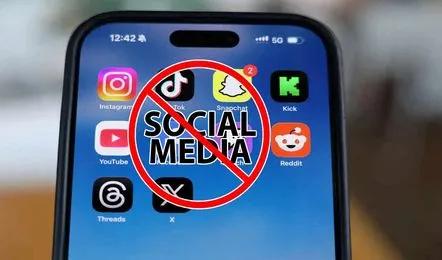
The growing concern over the impact of social media on young minds has sparked a global debate about whether children should be allowed unrestricted access to platforms such as Instagram, Snapchat, TikTok, Facebook, and X.
Following the lead of countries such as Australia and the United Kingdom, which have moved to impose strict age-based restrictions on social media usage, India too must confront a critical question: Should social media applications be banned for children under the age of 16?
India is home to one of the world’s largest populations of young internet users. Affordable smartphones, inexpensive data plans, and widespread internet connectivity have enabled millions of children to spend hours each day on social media platforms.
While these platforms offer opportunities for learning, creativity, and communication, they have also raised serious concerns about mental health, addiction, cyberbullying, privacy, and exposure to harmful content.
Why Some Countries Are Taking Action
Australia has emerged as one of the strongest advocates for restricting children’s access to social media, arguing that social media companies have failed to adequately protect young users.
Policymakers there cite increasing evidence linking excessive social media use to anxiety, depression, sleep disorders, body-image issues, and declining attention spans among teenagers.
Similarly, the United Kingdom has intensified discussions on stronger protections for children online. British policymakers argue that children are being exposed to addictive algorithms designed to maximize screen time rather than promote healthy development.
The objective is not to punish children but to create a safer digital environment during their formative years.
These developments have attracted attention worldwide, including in India, where concerns about excessive smartphone use among children are becoming increasingly visible.
Why India Should Consider Restrictions
Protecting Mental Health
Indian children today are growing up in a digital environment where social validation is often measured through likes, shares, and follower counts. Constant comparison with peers and influencers can damage self-esteem and increase stress levels.
A restriction on social media use until the age of 16 could help young people develop stronger emotional resilience before entering the highly competitive online world.
Tackling Digital Addiction
Many social media platforms are intentionally designed to keep users engaged through endless scrolling, notifications, and personalized content recommendations.
Children are particularly vulnerable to these addictive features because their self-control mechanisms are still developing.
Reducing access during childhood could help prevent unhealthy screen habits from becoming lifelong addictions.
Combating Cyberbullying
Cyberbullying has become a major challenge in Indian schools. Unlike traditional bullying, online harassment can continue around the clock and reach a much larger audience. Victims often experience anxiety, depression, and social withdrawal.
Restricting children’s access to social media could significantly reduce their exposure to online abuse.
Shielding Children from Harmful Content
Despite advances in moderation technology, social media platforms continue to expose young users to misinformation, inappropriate content, online predators, and dangerous trends. Parents often struggle to monitor what their children encounter online.
A stricter age limit could provide an additional layer of protection.
The Challenges of a Ban
While the arguments for restrictions are compelling, implementing a complete ban in India would not be easy.
Enforcement Difficulties
India has hundreds of millions of internet users, including a vast number of children. Age verification systems remain imperfect, and many children can easily create accounts using false birth dates.
Without robust technological safeguards, a ban could become largely symbolic.
Educational and Social Benefits
Social media is not solely a source of entertainment. Many students use platforms to learn new skills, follow educational channels, participate in academic communities, and stay informed about current events.
A blanket ban may unintentionally deprive children of valuable learning opportunities.
Digital Literacy Matters
In the modern economy, digital literacy is becoming as important as traditional literacy. Some experts argue that children should be taught how to use technology responsibly rather than being completely shielded from it.
The challenge is to strike a balance between protection and preparation.
A Better Approach for India
Instead of adopting an outright ban, India may benefit from a more nuanced framework:
– Mandatory parental consent for users under 16.
– Strong age-verification mechanisms.
– Limits on screen time and addictive design features.
– Default private accounts for minors.
– Restrictions on targeted advertising aimed at children.
– Digital literacy and online safety education in schools.
– Strict penalties for platforms that fail to protect young users.
Such measures would allow children to access the educational benefits of the internet while reducing the risks associated with excessive social media use.
Conclusion
The debate over social media access for children is ultimately a debate about balancing freedom and protection. The experiences of Australia and the United Kingdom demonstrate that governments are increasingly willing to intervene when they believe children’s well-being is at stake.
India should take these international developments seriously. While a complete ban for children under 16 may be difficult to enforce and could have unintended consequences, stronger regulations are clearly needed. By combining parental involvement, digital education, age verification, and platform accountability, India can create a safer online environment without completely cutting young people off from the digital world.
The goal should not be to keep children away from technology forever, but to ensure they enter the social media ecosystem at an age when they are better equipped to use it responsibly and safely.

