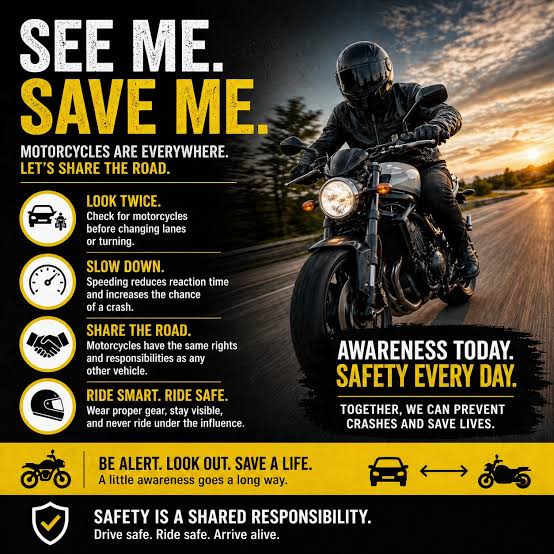

Driving on Indian roads is a challenging experience. From crowded city streets and unpredictable traffic to pedestrians, two-wheelers, animals, potholes, buses and vehicles suddenly changing lanes, motorists face hazards from every direction. In such an environment, simply looking straight ahead is not enough. Drivers need 360-degree awareness—the ability to constantly understand what is happening in front, behind and on both sides of the vehicle.
360-degree awareness can significantly improve road safety and help drivers anticipate danger before it becomes an emergency.
What Is 360-Degree Awareness?
360-degree awareness means maintaining a continuous understanding of the surroundings while driving. A driver should not focus only on the vehicle immediately ahead but should also regularly monitor:
– The road ahead
– Rear-view and side mirrors
– Blind spots
– Vehicles approaching from behind
– Two-wheelers filtering through traffic
– Pedestrians and cyclists
– Vehicles entering from side roads
– Roadside obstacles and parked vehicles
– Traffic signs, signals and road conditions
This does not mean constantly turning one’s head or becoming distracted. Instead, it involves developing a disciplined habit of scanning the entire driving environment.
Why Is It Important on Indian Roads?
Indian roads are highly dynamic. Traffic conditions can change within seconds. A motorcycle may suddenly appear between two cars, an auto-rickshaw may change lanes without warning, a pedestrian may cross unexpectedly, or a vehicle may enter the main road from a small side lane.
Many accidents occur because drivers notice a danger only when it is already too close. 360-degree awareness allows motorists to identify potential risks earlier and gives them more time to brake, slow down or change direction safely.
The Importance of Regular Mirror Checks
Mirrors are one of the most important tools for maintaining awareness. Drivers should regularly check:
– The rear-view mirror to understand traffic behind
– The left-side mirror before moving towards the left
– The right-side mirror before changing lanes or turning right
However, mirrors do not provide a complete view. Every vehicle has blind spots. Therefore, before changing lanes, drivers should combine mirror checks with a quick shoulder check whenever it is safe to do so.
This is particularly important in India, where two-wheelers often travel in gaps between larger vehicles.
Special Importance for Motorcyclists
For motorcyclists, 360-degree awareness is even more critical because they have less physical protection than occupants of cars.
A motorcycle rider should constantly be aware of:
– Vehicles approaching from behind
– Cars and buses moving into the rider’s lane
– Potholes and road debris
– Doors opening from parked cars
– Pedestrians crossing suddenly
– Vehicles emerging from side roads
– Other motorcycles riding in blind spots
Riders should avoid staying for long periods in the blind spots of cars, buses and trucks. If the driver of a larger vehicle cannot see the motorcycle in the mirror, the motorcyclist should assume that the vehicle may move into their path.
Look Beyond the Vehicle Directly Ahead
One of the most useful driving habits is to look several vehicles ahead whenever possible.
If a driver only watches the vehicle directly in front, a sudden brake may come as a surprise. But by looking further ahead, the driver may notice:
– Traffic slowing down
– A pedestrian crossing
– A pothole
– A traffic jam
– An accident
– A vehicle turning
– An obstruction on the road
This extra information provides valuable reaction time.
Anticipation Is Better Than Reaction
Safe driving is not only about reacting quickly. It is about anticipating what might happen next.
For example:
– A bus stopping near a crowded area may hide pedestrians.
– A parked car near a junction may suddenly move.
– A vehicle approaching a gap may attempt an unexpected overtake.
– A motorcycle moving close to a car may enter its blind spot.
– A person standing near the edge of the road may suddenly cross.
The safest driver constantly asks: “What could happen next?”
This mindset can prevent many dangerous situations.
360-Degree Awareness in City Traffic
In cities such as Hyderabad, Delhi, Mumbai, Bengaluru and Chennai, traffic is often crowded and unpredictable. Vehicles may come from multiple directions, lanes may not always be clearly marked, and traffic conditions can change rapidly.
In such situations, drivers should:
1. Maintain a safe following distance.
2. Check mirrors frequently.
3. Avoid unnecessary lane changes.
4. Watch for two-wheelers between lanes.
5. Be cautious near junctions and bus stops.
6. Expect pedestrians even where there are no proper crossings.
7. Slow down near schools, markets and residential areas.
A driver who is aware of the entire traffic environment is better prepared to deal with sudden changes.
The Role of Speed
High speed reduces the time available to process information. A driver travelling too fast may see a hazard but may not have enough time to avoid it.
Speed should always match:
– Traffic density
– Road quality
– Visibility
– Weather conditions
– Presence of pedestrians
– Traffic behaviour
On Indian roads, where unexpected hazards are common, moderate speed combined with good awareness is often far safer than simply relying on powerful brakes or advanced vehicle technology.
Avoid Distractions
360-degree awareness is impossible when the driver’s attention is divided.
Common distractions include:
– Mobile phone use
– Texting
– Adjusting navigation while moving
– Eating or drinking
– Loud conversations
– Excessive use of entertainment systems
– Fatigue and drowsiness
A few seconds of distraction can result in a driver missing a pedestrian, motorcycle or vehicle entering the road.
Benefits of 360-Degree Awareness
1. Reduces Accidents
Early detection of hazards gives drivers more time to respond safely.
2. Improves Lane Changes
Checking mirrors and blind spots reduces the risk of collisions with vehicles, particularly motorcycles.
3. Protects Vulnerable Road Users
Pedestrians, cyclists and motorcyclists can be identified earlier.
4. Reduces Sudden Braking
By looking further ahead, drivers can anticipate traffic slowdowns and avoid emergency braking.
5. Improves Confidence
Awareness makes drivers more comfortable in heavy traffic because they have a better understanding of their surroundings.
6. Helps Prevent Road Rage
Drivers who are aware of surrounding traffic are less likely to be surprised by sudden movements and react aggressively.
7. Makes Driving More Predictable
A driver who regularly checks surroundings is more likely to signal properly, maintain a safe position and make smoother manoeuvres.
Building the Habit
360-degree awareness can be developed through practice. Drivers should make the following habits automatic:
Look ahead → Check mirrors → Scan the sides → Identify potential hazards → Maintain a safe escape route.
Before changing direction or position, the driver should ask:
“What is around me, and what could move into my path?”
This simple question can make a major difference.
Conclusion
Driving on Indian roads requires much more than controlling the steering wheel, accelerator and brakes. It requires constant awareness of the complete traffic environment.
360-degree awareness is the ability to see the road as a constantly changing environment rather than focusing only on what is immediately in front of the vehicle.
When drivers regularly scan their surroundings, check mirrors, understand blind spots, anticipate the behaviour of others and avoid distractions, they gain valuable time to prevent accidents.
On India’s busy and unpredictable roads, awareness is one of the most powerful safety tools available to every driver. The best driver is not the one who reacts fastest—but the one who sees the danger early enough to avoid it.
360-Degree Awareness While Driving on Indian Roads: The Key to Safer Journeys