

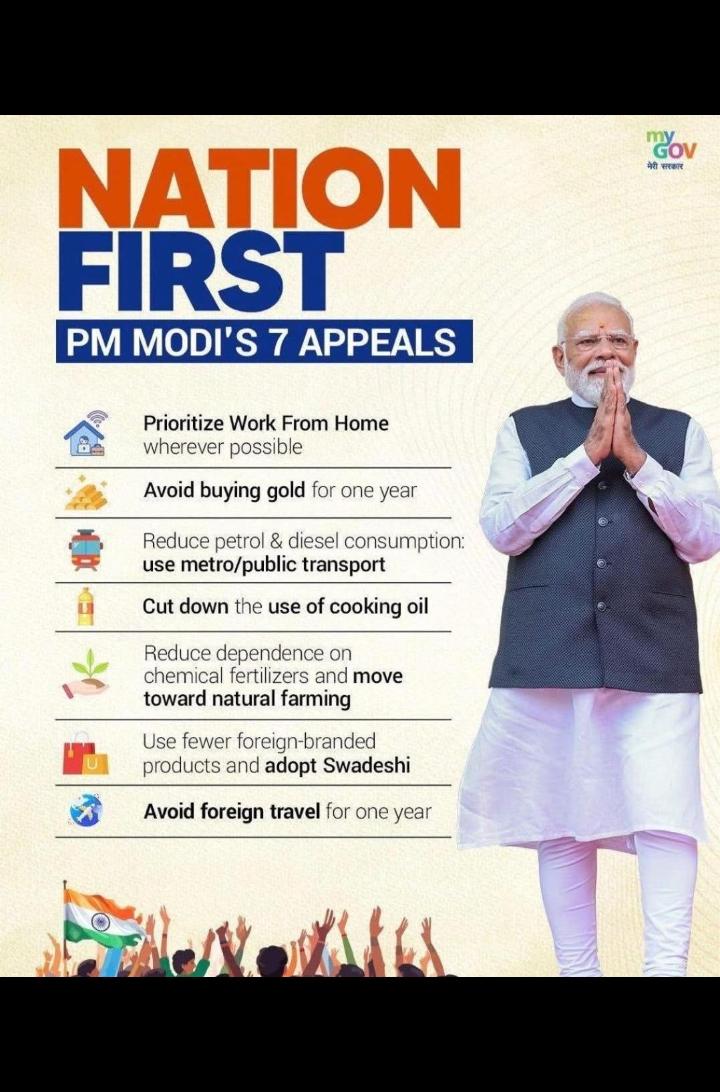
In recent months, rising global crude prices and currency fluctuations have pushed petrol and diesel charges in India to historic highs. These increases have put pressure on household budgets, transportation costs, and business expenses. In response to this, Prime Minister Narendra Modi has urged citizens to reduce the demand for petrol and diesel and adopt more sustainable commuting practices. Following this appeal, here’s how individuals, households, and communities can adjust their lifestyles to manage energy costs while contributing to environmental and economic wellbeing.
1. Embrace Working From Home (WFH)
One of the most immediate ways to reduce fuel consumption is by cutting down on daily commutes.
Reduce Travel Costs: Working from home means fewer trips to the office and less petrol or diesel spent weekly. It directly lowers an individual’s fuel expenses.
Increase Flexibility: Many employers now recognize that remote work can be just as productive, especially in sectors such as IT, finance, education, and media.
Improve Work–Life Balance: WFH saves time and reduces stress associated with long commutes — which also indirectly cuts spending on food and refreshments outside the home.
Tips for effective WFH:
Set up a dedicated workspace at home.
Maintain a structured daily schedule.
Use reliable internet tools for communication (video conferencing, shared calendars, cloud collaboration).
2. Prioritize Public Transportation
Public transportation offers one of the most fuel-efficient ways to travel, especially in urban centers.
Lower Individual Fuel Use: Buses, local trains, and metros carry many people at once, which distributes fuel usage more efficiently than individual cars or bikes.
Cost Savings: Monthly passes for buses and metros are often cheaper than daily fuel costs.
Reduced Traffic and Pollution: More people on public transport lowers congestion and improves air quality.
How to make the shift easier:
Plan travel routes using apps or schedules.
Consider park-and-ride options (drive part of the way, then use public transit).
Share commute information with colleagues or neighbors to form groups that use the same routes.
3. Move Toward Electric Vehicles (EVs)
Shifting to EVs is one of the cornerstone suggestions linked to the Prime Minister’s appeal — and for good reasons.
Lower Running Costs: EVs do not use petrol or diesel, and charging electricity — even at home — is often cheaper than fuel.
Government Incentives: The Indian government offers subsidies and tax benefits for electric scooters, bikes, and cars under various schemes such as FAME India (Faster Adoption and Manufacturing of Electric Vehicles).
Environmentally Better: Reduced dependence on fossil fuels means lower carbon emissions and cleaner air.
EV adoption tips:
Start with electric two-wheelers which are affordable and ideal for city use.
Check availability of charging stations near home or workplace.
Explore loan and subsidy options offered by banks and manufacturers.
4. Simple Everyday Habits That Help
In addition to WFH, public transit, and EV transition, small habits can create big savings:
Carpooling: Share rides with friends or coworkers.
Walk or Cycle: For short distances, nothing beats zero-fuel travel.
Plan Trips Together: Combine errands to reduce repeat travel.
Maintain Vehicles: Well-maintained engines use fuel more efficiently.
5. Supporting the National Goal
Prime Minister Modi’s appeal isn’t just about saving money — it’s about national strength. Reducing petrol and diesel demand:
Helps control inflation
Reduces import dependency
Conserves foreign exchange
Improves energy security
Supports India’s climate commitments
Conclusion
While rising fuel prices affect everyone, citizens can respond strategically by embracing remote work, using public transit, and transitioning gradually to electric vehicles. These steps not only reduce individual expenses but also align with India’s broader goals of sustainability, economic stability, and energy independence.
By rethinking how we travel and work, every Indian can contribute to a more resilient and eco-friendly future — just as the Prime Minister has encouraged.

