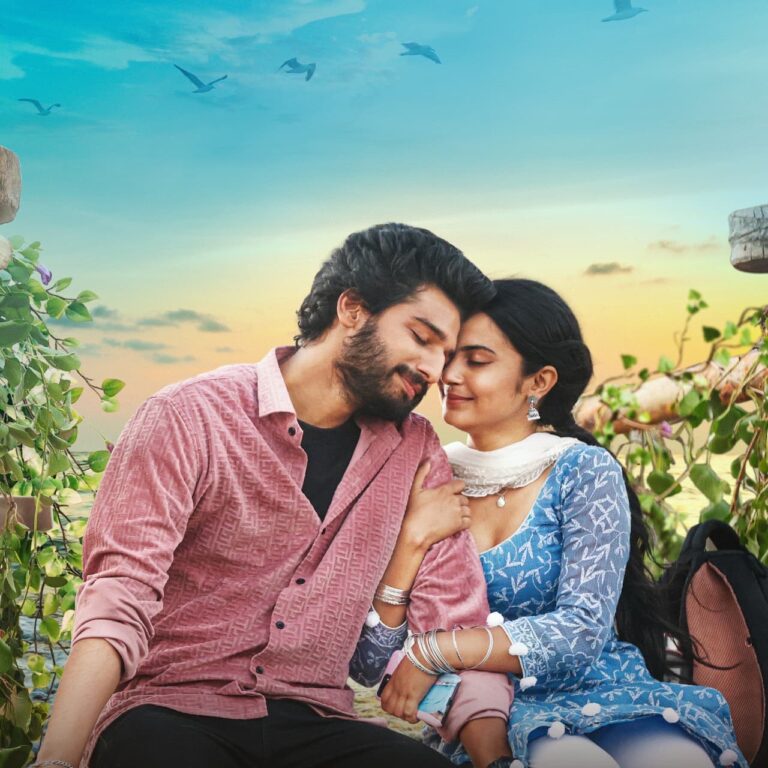
Santosh Sobhan’s latest film is “Couple Friendly.” Manasa Varanasi is the heroine. Produced by UV Concepts and presented by UV Creations, the film is being made in Telugu and Tamil. Ajay Kumar Raju. P is the co-producer.
Ashwin Chandrasekhar is directing it. “Couple Friendly” is being made as a musical romantic love story. The lyrical song ‘Naalo Nenu’ from this film has been released. Aditya Ravindran composed the music, Saraswathi Putra Ramajogayya Sastry wrote the lyrics, and Sanjith Hegde sang it.
Kushendar Ramesh Reddy, who gained national recognition for his work in films like Polimera and Razakar, is back with another visually striking film titled Tribanadhari Barbarik, set to release on August 29th. Directed by Mohan Srivatsa and produced by Vijaypal Reddy Adidhala under the Vanara Celluloid banner, the film is being presented by star director Maruthi on Maruthi Team Product. With its teaser and trailer already creating buzz, especially for the visuals and griping narrative, the film has generated high expectations. Interim, cinematographer Kushendar Ramesh Reddy shared his experience working on the project.
How did the journey of ‘Tribandhaari Barbarik’ begin?
During the final schedule of Razakar, director Mohan narrated the story to me. I was instantly drawn to it. After hearing the story, I offered suggestions and references on color grading and visual patterns that would enhance the narrative. Maruthi garu appreciated those ideas immensely. That’s how director Mohan, producer Vijay, and I came together and started this project.
What were the major challenges during filming?
Most of Tribanadhari Barbarik was shot at night and under rain effects. Creating a monsoon atmosphere during summer is no easy task, which was our biggest challenge. Simulating the rainy season in hot weather required a lot of effort. Producer Vijay took a bold step by not compromising on the vision. Despite this being his debut film, he invested in the project with full faith in the story and allowed us to work with a substantial budget.
What are the film’s standout features?
Each character in Tribanadhari Barbarik has a unique identity. We used distinct color grading for each character, which changes in accordance with their transformation throughout the film. The rain effect scenes are designed to look as natural as possible. Visually, the film is on par with high-quality productions like Tumbbad and 2018 in terms of realism and texture.
What is the core strength of the film?
The film’s biggest strength is its story. When I first heard the script, I immediately decided to take it on—just like I did with Polimera and Razakar. Every character has significance, and the climax is completely unpredictable. The way it’s structured will leave the audience surprised.
How was your experience working with the cast?
Udaya Bhanu garu plays a very powerful role in the film. She’s returning to the screen with an impactful performance after many years. Vasishta garu will also be seen in a fresh new avatar. I’ve known Sathyaraj garu since my days working on Baahubali. He is extremely punctual on set. Though we put him through challenging night shoots and rain scenes, he never once complained (laughs).
Are you satisfied with how the film turned out?
I was able to film Tribanadhari Barbarik exactly how I had envisioned it when I first heard the story. For that, I thank both the director and producer for giving me complete creative freedom. The producer never hesitated to spend where needed. He was on set every single day, constantly motivating the team by saying, “We believe in the story, the film has to come out well.” Having such a committed producer is what made it possible for me to bring the film to life just as I visualized.
What can the audience expect from the story?
People often say that Telugu cinema doesn’t produce enough content-driven films and look to Malayalam cinema for that. But Tribanadhari Barbarik is here to prove otherwise. This is a rare kind of film in Telugu, deeply rooted in content, with strong characters and storytelling that will surprise the audience.
What’s next for you?
I recently wrapped up a film with Allari Naresh titled 12A Railway Colony, which will be released soon. Polimera 3 will also begin shooting shortly. I will continue collaborating with director Anil garu on upcoming projects. I’ll be working as a cinematographer for a new film titled Kamakhya with some other director.
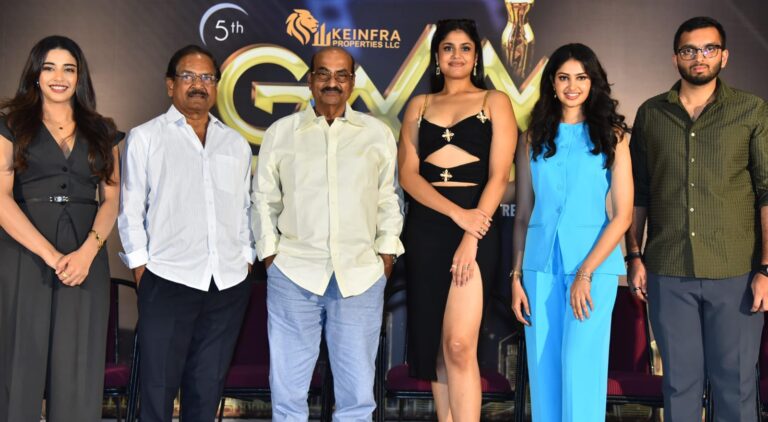
The prestigious GAMA (Gulf Academy Movie Awards) have a special craze in Tollywood. Four editions have already been held in Dubai with great fanfare. Now, the 5th edition of the awards ceremony is set to take place grandly on August 30th at the Sharjah Expo Centre in Dubai. Vaibhav Jewellers is the title sponsor for this awards event.
In this regard, a curtain-raiser event was organized in Hyderabad on Sunday. The event was attended by GAMA CEO Saurabh Kesari, Vaibhav Jewellers MD Raghav, jury members, well-known directors A. Kodandarami Reddy and B. Gopal, actresses Faria Abdullah, Manasa Varanasi, Daksha Nagarkar, and actor Viva Harsha.
Raviteja’s 75th film, Mass Jaathara, which was scheduled for release on the 27th of this month, is likely to be pushed back by at least two months. It is understood that producer Naga Vamsi has decided to wait until October, as a September release is not possible.
It is also being said that Teja Sajja’s latest film, Mirayi, is also unlikely to release on the previously announced date of September 5. Teja Sajja is known as a “superhero” after his role in Hanu-Man. This film is also expected to join the October race.
While the reason for the postponement of Mass Jaathara is known to everyone, it is understood that the reason for the postponement of Mirayi is due to graphics work.
Even though he crossed the official retirement age set by governments more than a decade ago, the Megastar is now moving ahead with the same energy as if he has just begun his career. We simply cannot help but admire him. Even those who, for various reasons, may not like him otherwise, have to wholeheartedly say hats off to him for this.
With two films currently running and another two already lined up, he seems to be moving forward with the mindset that he must maintain this momentum for at least another ten years. And it’s not just the Megastar—almost all top heroes of South India are proving to be a mountain of inspiration to millions in this regard. They are living proof of the saying, “Age is just a number.”
At seventy-plus, Rajinikanth is charging ahead in the same way. With his trademark humor, he jokes, “This is a 1950 model body,” while surprising audiences with back-to-back films. Kamal Haasan too stands in the same league. In Malayalam cinema, Mammootty and Mohanlal are walking the same path. In Telugu, Balakrishna, Nagarjuna, and Venkatesh are also setting the screen ablaze in ways that even young heroes can envy.
Once people reach a certain age, and their responsibilities are settled, many tend to condition themselves mentally with thoughts like “What more is left? Life is over. Age has caught up with me.” They let their lives become dull and lifeless. But all these stalwarts are showing a different way—they are role models proving that “Our age is determined only by our mindset.”
Let us learn from them to keep moving forward without letting the thought of age even come near our hearts!
Father-Daughter Drama that tugs at the heartstrings, Vanara Celluloid, Zee Studios, and Maruthi Team Product Beauty’s teaser unleashed – Grand Release on 19th September
Vanara Celluloid, Zee Studios, and Maruthi Team Product present the emotionally compelling and heartwarming teaser for their upcoming film Beauty. This intimate tale explores the intertwining of youthful romance and the cherished bond between father and daughter, all set against the backdrop of middle-class life.
Featuring Ankith Koyya and Nilakhi Patra, Beauty is directed by JSS Vardhan, acclaimed for his work in Geetha Subramanyam and Hello World, with production helmed by Adidhala Vijayapal Reddy and Umesh Kumar Bansal. The film’s screenplay and story, penned by R V Subrahmanyam.
The teaser introduces the main female character and shows the warmth and deep feelings in the family. It also includes light moments of humor that reflect everyday middle-class life, making the characters feel real and relatable.
As the teaser goes on, the mood becomes more serious and shows hints of struggles and problems the characters will face. It ends by focusing on the love, sacrifices, and determination of parents, bringing out the emotional heart of the film.
Beautiful visuals and music by Vijay Bulganin, along with cinematography by Shrie Sai Kumaar Daara, add to the experience. Ankith Koyya gives a strong performance, and Nilakhi Patra shines as the lead actress. The film also features well-known actors like Naresh, Vasuki, Nanda Gopal, Sonia Chowdhary, Nithin Prasanna, Murali Goud, and Prasad Behara.
Post-production is complete, and Beauty will be released in theaters on September 19th. The film promises to be one of the most touching movies this year, celebrating love, family, and strength.
India’s rapid urbanization and a booming population have made vehicle parking a monumental challenge across its cities, particularly in bustling metropolises like Hyderabad.
The number of private vehicles, especially two-wheelers and cars, has skyrocketed, while urban infrastructure has failed to keep pace. This disparity has led to a daily struggle for millions, manifesting in traffic congestion, environmental degradation, and public frustration.
The Two-Wheeler and Car Parking Woes in Hyderabad
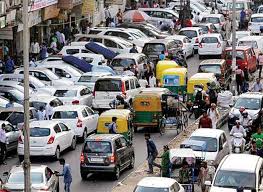
Hyderabad, a key hub for technology and business, perfectly illustrates India’s parking dilemma. The city’s roads are often choked by vehicles parked illegally on the streets, footpaths, and in no-parking zones.
This isn’t just a minor inconvenience; it’s a major cause of traffic bottlenecks and safety hazards. Commercial areas and market roads are particularly affected, as customers and business owners often have no choice but to park on the carriageway, narrowing the path for moving traffic.
The problem extends beyond public roads. Many apartment complexes and gated communities in Hyderabad face their own internal parking struggles.
There’s often a mismatch between the number of residents and the available parking spaces, leading to disputes, unauthorized parking, and a lack of designated spots for tenants and guests.
Broader Parking Challenges Across India The situation in Hyderabad is a microcosm of a nationwide problem. Several factors contribute to the escalating parking crisis in Indian cities:
* Vehicle Ownership vs. Infrastructure: The desire for personal mobility has led to a surge in private vehicles, but the creation of dedicated parking spaces and a robust public transport network hasn’t kept up. This forces a significant portion of urban road space—up to 40% in some cities—to be used for parking rather than for traffic flow. * Inadequate Public Transport: In many cities, public transportation is either unreliable, overcrowded, or lacks sufficient reach, pushing more people toward owning private vehicles. This increases the demand for parking in an already constrained environment. * Haphazard Urban Planning: Many older buildings and markets were constructed without adequate provision for modern-day vehicle populations. While newer constructions are often required to allocate a certain percentage of their built-up area for parking, existing structures continue to be a source of the problem. * Lack of Enforcement: Although fines exist for illegal parking, inadequate enforcement and a lack of alternative parking options mean that motorists often take the risk of parking improperly.
Finding Solutions for the Parking Problem To tackle this multifaceted issue, Indian cities, including Hyderabad, are exploring a range of solutions:
* Multi-Level and Automated Parking Systems: Cities are turning to vertical parking solutions to optimize space. Hyderabad, for instance, is developing multi-level parking complexes, like the one at Nampally, which will use fully automated technology to efficiently park a large number of vehicles in a small footprint. * Smart Parking Infrastructure: Implementing smart technology, such as real-time parking sensors and mobile apps, can help drivers locate available spots, reducing the time spent circling for parking. This not only eases frustration but also cuts down on fuel consumption and pollution. * Stricter Urban Policies: There’s a growing push for stricter urban planning policies that mandate sufficient parking provisions in new residential and commercial developments. * Improving Public Transport: A long-term solution lies in creating reliable, efficient, and affordable public transportation systems that can reduce the dependence on private vehicles, thereby lessening the demand for parking spaces. * Citizen Engagement and Enforcement: Public awareness campaigns and rigorous enforcement of parking regulations are crucial to change behavior and ensure compliance.